
Iran Strikes US Bases Across Gulf States in Retaliation
Iran launches missile and drone attacks on US military bases in Bahrain, UAE, Qatar, Kuwait, Iraq, Saudi Arabia and others, claiming targets are American assets not neighbors, amid escalating US-Israel-Iran war.
Photo Gallery
What Happened
-
Iran launches retaliatory missile/drone strikes on US bases in Bahrain, Qatar, UAE (Dubai, Abu Dhabi, Al Dhafra, Al-Minhad), Kuwait (Ali Al-Salem), Iraq (Camp Victory, Harir), Saudi Arabia, Jordan, Oman, Lebanon; damages Fifth Fleet base, energy sites, airports, civilian areas.
-
Iran claims strikes target only US bases/assets, not neighbors; officials (FM, spokesmen, envoys) call them defensive responses to US-Israel attacks from regional bases, including killing of Supreme Leader.
-
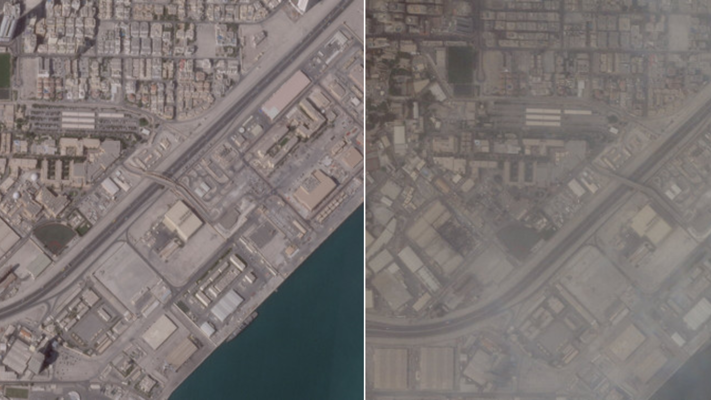
Satellite images confirm damage at US bases (Bahrain, Kuwait) and Iranian sites (Shiraz airport, Bandar Abbas naval base, drone facilities) from mutual strikes.
-
Iran fires massive barrages: ~2,000 drones, 500 missiles at Gulf states; IRGC drone swarms hit air bases, satellite/radar centers; threatens oil routes, sleeper cells globally.
-
US-Israel intensify strikes on Iran (Saravan airfield, naval targets near Hormuz, school-adjacent base with Tomahawks); withdraws 90% troops from at-risk bases; deploys naval/air forces to Gulf.
-
Regional fallout: Explosions in Doha, Dubai, Manama; Gulf states back US; Germany considers troop withdrawal; Iraq PM rejects airspace use; delivery disruptions, fears of water/energy crises.
Timeline
-
Late Feb 2026: Israel launches major strikes on Iran; US-Israeli operation kills Iran's Supreme Leader (stories 6, 45, 60).
-
Feb 28, 2026: US/Israel strike Iran massively (story 60).
-
Mar 1, 2026: Iran retaliates with strikes on US bases in Kuwait (satellite images, story 27).
-
Mar 5, 2026: Iran launches missiles/drones on Bahrain, Qatar, UAE (Dubai/Abu Dhabi/Doha), Iraq, Jordan, Kuwait; FM spox claims only US bases targeted (stories 1-5,13,30).
-
Mar 6, 2026: Iran/proxy strikes on energy sites, US bases, airports in Bahrain, Iraq, Kuwait, Qatar, Saudi Arabia, UAE; expands to Kurdish bases (stories 26,31).
-
Mar 7, 2026: Drone swarm on UAE's Al Dhafra Air Base; mass drone strikes on Kuwait, Israel; continued attacks on Saudi Arabia, Kuwait, Bahrain, UAE (stories 39,41,46).
-
Mar 7-8, 2026: Iran strikes civilian infrastructure, US bases in Gulf states (story 46).
-
Mar 9, 2026: US Tomahawk hits Iranian base near school (story 47); Iran warns on energy attacks (story 48).
Key Quotes
"Tehran does not target its neighbors, but rather US bases in the region."
— Foreign Ministry Spokesman Esmaeil Baghaei (MNA)
"Our actions are directed at military bases used against us."
— Ambassador Mansour Shakib Mehr (Iran’s envoy in South Africa)
"Tehran’s attacks are aimed only at US bases and assets... no casualties among Arab neighbours."
— Deputy Foreign Minister Saeed Khatibzadeh
"When the enemy attacks us from regional bases, we respond to it and will respond; this is our right."
— Ali Larijani (Iran’s Supreme National Security Council secretary)
Opposing Views
Iranian Perspective
- Strikes are defensive retaliation solely against US military bases (e.g., in Bahrain, UAE, Qatar, Kuwait, Iraq) used for US-Israeli attacks on Iran.
- Bases are "American territory"; no intent to target neighbors (Iran FM spox, ambassadors, IRGC statements in stories 10,11,13,15,16,21,45,52).
- Claims no civilian casualties; collateral due to US "hiding behind" allies (stories 21,32).
Western/Gulf Media Perspective
- Attacks hit civilian infrastructure (airports, energy sites, cities like Dubai, Doha), risking wider war and pulling in neighbors (NYT, Guardian, Long War Journal in 4,5,6,19,20,31,46).
- Escalation beyond bases; strikes on Gulf states, Kurdish groups, even data centers (stories 9,18,50).
US/Gulf Response
- Attacks unify Gulf Arabs with US; may expand base access (Pentagon chief, story 24).
- Warnings of Iranian sleeper cells globally (stories 51,54,57).
What Markets Believe
Historical Background
Historical Context: US-Iran Tensions and Gulf Basing
Post-1979 Iranian Revolution, US severed ties with Iran, viewing it as a foe. Gulf states (Bahrain, Qatar, UAE, Kuwait, etc.) hosted US bases after 1991 Gulf War to counter Iraq, then Iran. Key sites: Bahrain's Fifth Fleet HQ (1948 origins, expanded post-9/11); Qatar's Al Udeid (largest US base, 2001+); UAE's Al Dhafra.
Iran's nuclear program (2002 revelations) led to sanctions, JCPOA (2015, Trump exit 2018), assassinations (Soleimani 2020), shadow war with Israel. Strikes on proxies escalated (e.g., 2023-24 Houthi, Hezbollah clashes).
Current Iranian retaliation follows US-Israeli killing of Iran's Supreme Leader (late Feb 2026), per reports. US launches from Gulf bases prompted Iran's "defensive" missile/drone barrages on those sites, framing hosts as shields for "American territory." This risks widening war, echoing 2019-20 base attacks.
Technical Details
Key Targets
-
US Fifth Fleet base, Bahrain (Manama): Satellite images show damage; hosts US naval ops in Persian Gulf.
-
Al Dhafra Air Base, UAE: Hit by IRGC Navy drone swarm; targeted US satellite comms center, early-warning/fire-control radars.
-
Ali Al Salem Air Base, Kuwait (near Al Jahra): Satellite imagery confirms post-strike damage (Planet Labs, Mar 1, 2026).
Weapons & Scale
-
Missiles/drones: Iran fired ~2,000 drones, 500 ballistic missiles at 7 Gulf states (Haaretz/NYT data); "massive" swarms vs. bases.
-
IRGC tactics: Drone barrages on air bases; proxy militias hit energy infra, airports (Mar 6-8).
Other Specs
- US prepped by withdrawing 90% personnel from missile range.
- Novel attack: Drones on Amazon data centers (UAE/Bahrain) – first vs. AI infrastructure.
Economic Impact
Affected Sectors: Energy (Oil & Gas), Defense, Aviation, Logistics
Short-term Impacts
- Oil prices surge 10-20%: Strikes on Gulf energy sites (Saudi, UAE, Qatar) and Strait of Hormuz threats disrupt 20% global supply; Brent crude spikes, inflating fuel costs worldwide.
- Stock markets plunge: Gulf indices (TASI, ADX) drop 5-10%; global risk-off hits S&P 500, Nikkei (-2-4%). Aviation stocks (airports hit in Dubai, Doha) fall sharply.
- Defense boost: US contractors (Lockheed, Raytheon) rally 5% on escalated arms demand.
Long-term Impacts
- Supply chain chaos: Prolonged conflict raises shipping insurance 50%, reroutes trade; inflation persists 1-2% higher globally.
- Energy transition accelerates: OPEC+ cuts fail amid damage; renewables gain as oil majors invest $100B+ in diversification.
- Regional GDP hit: Gulf economies lose 2-5% growth; broader recession risk if war expands.
X Discussion Summary
Summary of X Discussion on Iran Strikes
Main Themes & Sentiments: Discussion centers on Iran's retaliatory missile/drone attacks on US bases and allies (Qatar, UAE, Bahrain, Kuwait, Saudi Arabia, Israel) following the killing of Iran's Supreme Leader. Sentiments are neutral-to-analytical in provided posts, focusing on escalation and regional repercussions; no strong emotional reactions visible.
Notable Accounts:
- @Sputnik (state-affiliated): Reports "new wave" strikes on Doha, Kuwait, Dubai, Bahrain, Abu Dhabi.
- @The Times Of India: Details strikes on Dubai, Sharjah, Bahrain's US Fifth Fleet.
- @CSIS (think tank): Highlights broad targets, links to analysis.
Common Opinions/Reactions: Posts treat event as factual escalation without debate. No user replies or viral backlash in data; minimal grassroots discussion.
Nostr Discussion Summary
Summary of Nostr Discussion on US-Israeli Attacks and Iran's Retaliation
Main Themes: Escalating Iran-US/Israel conflict, with posts detailing Iranian missile/drone strikes on US bases (Qatar, UAE, Bahrain, Saudi Arabia, Dubai consulate), embassy attacks, and a school strike blamed on US. Iranian framing as "legitimate self-defense"; US counter-ops targeting Iranian missiles.
Perspectives & Notable Voices:
- Pro-Iran/anti-US: IRGC/Sputnik/PressTV shares; Israeli journalist Alon Mizrahi claims Iran dominating, US/Israel "lost," predicting end of US ME presence (debated as propaganda vs. alt-media truth).
- Neutral/Analytical: @TheBoard posts on embassy evacuations, Riyadh drone strike, US missile hunts—questioning media silence.
- Diplomatic: Iran's Pezeshkian offers halt to neighbor strikes if no attacks originate there.
Common Opinions/Debates: Iran prevailing; US weakness exposed. Recurring: Alt-media fills "censored" gaps. Minimal counter-narratives; hype around historic blows.
Bluesky Discussion Summary
Summary of Bluesky Discussion on Iran Attacks
Main Themes & Sentiments: Posts focus on Iran's retaliatory missile/drone strikes on US bases in Gulf states (Bahrain, Qatar, Kuwait, UAE, Saudi Arabia, Iraq, Jordan, Oman) following US-Israeli actions killing Iran's Supreme Leader. Escalation across Middle East highlighted, with some civilian targets (airports, hotels, data centers). Sentiment mixes alarm at regional war, anti-US/Israel anger, and schadenfreude.
Common Opinions & Debates:
- Consensus on targets: US military installations primary, but debates on civilian hits (e.g., AWS data centers as "military" for AI targeting).
- Pro-Iran views justify as retaliation vs. neighbors; anti-West posts celebrate (e.g., @D. Juschka wishes divine smiting).
- Economic fallout noted (@Josie Glausiusz on tech investments).
Notable Accounts: @OSINTRadar, @The New Arab, @CSIS for news; replies debate data centers' status (@SF Guy, @Leigh).
Minimal personal reactions; mostly reposts.
Full story
Iran has unleashed a barrage of missile and drone strikes on U.S. military bases across at least ten Middle Eastern countries, including Bahrain, Iraq, Qatar, Kuwait, Oman, Saudi Arabia, the United Arab Emirates, Jordan, and Lebanon, in retaliation for U.S.-Israeli operations that killed Iran's Supreme Leader. Satellite imagery confirms damage to key sites like the U.S. Fifth Fleet base in Bahrain's Manama and Al Dhafra Air Base in the UAE, with explosions reported over cities including Dubai, Doha, and Kuwait City. Tehran insists the attacks target only American assets, not host nations, amid escalating fears of a wider regional war. The conflict erupted in late February 2026 when Israel launched a major military campaign against Iran, followed by U.S. strikes, including a Tomahawk missile that reportedly hit a Revolutionary Guards base near a school in Minab, as detailed by The New York Times. These actions came after the killing of Iran's Supreme Leader in a joint U.S.-Israeli operation, prompting Iran to frame its response as purely defensive. U.S. bases in the Gulf—housing assets like the massive Al Udeid facility in Qatar, the largest American base in the region—have long been flashpoints, with Iran viewing them as "American territory" on sovereign soil, according to government spokeswoman Fatemeh Mohajerani. Prior to the Iranian retaliation, U.S. Secretary of War Pete Hegseth stated that 90% of American personnel had been withdrawn from vulnerable bases. Developments unfolded rapidly from early March. On March 1, satellite images from Planet Labs showed strikes on Kuwait's Ali Al Salem Air Base near Al Jahra. By March 5, Iranian state media reported fresh attacks on Bahrain, Kuwait, Abu Dhabi, Dubai, and Doha, with the Islamic Revolutionary Guard Corps (IRGC) claiming a "massive" drone swarm on Al Dhafra Air Base, hitting U.S. satellite communications, early-warning radars, and fire-control systems, per Tasnim news agency. Explosions rocked Iraq's Camp Victory and Harir Air Base in Kurdistan, while Saudi air bases hosting U.S. forces were targeted. March 6 saw Iran and proxy militias strike energy infrastructure, airports, and government sites in Bahrain, Iraq, Kuwait, Qatar, Saudi Arabia, and the UAE, according to FDD's Long War Journal. On March 7-8, attacks continued on civilian-linked targets like desalination plants and Amazon data centers in the UAE and Bahrain—potentially the first drone strikes on such facilities. Haaretz data indicates Iran fired thousands of ballistic missiles and over 2,000 drones plus 500 missiles at seven Gulf states in the war's opening days, with the New York Times confirming at least six U.S. bases hit. By March 9, IRGC naval drones targeted U.S. air bases near the Strait of Hormuz. Iranian officials uniformly defended the strikes as precise and non-aggressive toward neighbors. Foreign Ministry spokesman Esmaeil Baghaei stated, "Iran does not target its neighbors but attacks the U.S. bases in the region," echoing Ambassador Mansour Shakib Mehr in South Africa: "Tehran’s actions are directed at military bases used against us." Deputy Foreign Minister Saeed Khatibzadeh claimed "no casualties among Arab neighbours," while Foreign Minister Abbas Araghchi cited U.S. Central Command videos as proof of attacks launched from Gulf soil, calling the response "defensive" to prevent further U.S. strikes. President Masoud Pezeshkian vowed to halt neighborly attacks unless provoked, though he later threatened escalation. IRGC spokesmen warned of responses to any launches from regional bases, with Secretary Ali Larijani affirming it as "our right and consistent policy." Gulf states activated air defenses, reporting downed drones over Doha and Kuwait, while delivery drivers dodged debris amid airport and home strikes. Pentagon chief Pete Hegseth noted Gulf allies like the UAE, Qatar, Kuwait, Bahrain, and Saudi Arabia were rallying: "Hey, we're with you," potentially expanding base access. Iraq's Prime Minister Sudani rejected being dragged into the war, telling U.S. Senator Rubio that Iraqi airspace must not target neighbors. Germany's Bundeswehr, hit incidentally, has no withdrawal plans yet. The strikes risk pulling more nations into the fray, disrupting global oil routes through the Strait of Hormuz and threatening energy infrastructure critical to world markets. With U.S. naval and air reinforcements deployed to the Gulf, bombing could intensify, as warned by American officials. Fears mount of Iranian "sleeper cells" activating globally—U.S. alerts cite potential cyberattacks, lone wolves, or strikes on American soil, though no specific threats are tied to locations. Analysts highlight novel targets like AI data centers, signaling hybrid warfare. Tehran warns against U.S. overflights of neighbors' airspace, while proxy actions in Iraq and Kurdistan deepen the chaos. Without de-escalation, the conflict could engulf Lebanon, Kurdish areas, and beyond, spiking oil prices and straining alliances—Gulf states may demand U.S. pullbacks, reshaping Middle East security.