
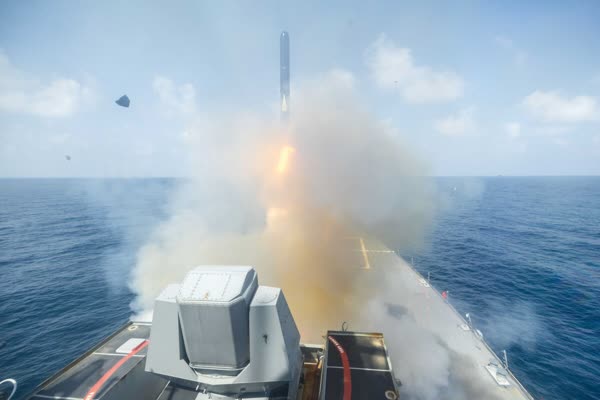
US Sinks Multiple Iranian Warships in Escalating Conflict
US forces, including submarines firing torpedoes for the first time since WWII, have destroyed over 30 Iranian vessels in the Gulf of Oman and Indian Ocean amid Operation Epic Fury. Iran retaliates by striking US tanker; war disrupts shipping and kills hundreds.
Photo Gallery
What Happened
- Operation Epic Fury launched: US Central Command initiates strikes on Iranian warships in Gulf of Oman under presidential orders, sinking Jamaran-class corvette and eliminating all 11 Iranian vessels there.
- US submarine torpedoes IRIS Dena: USS Charlotte (Los Angeles-class) fires MK-48 torpedo in Indian Ocean off Sri Lanka, sinking Iranian destroyer; first enemy warship sunk by US torpedo since WWII; over 80 Iranian sailors killed, 30+ rescued by Sri Lanka.
- US-Israeli airstrikes intensify: Strikes hit Tehran and Iranian cities for days, killing 900+ in Iran; US claims 2,000+ targets and 30+ ships destroyed, neutralizing Iran's Gulf navy.
- US downs Iranian missile: Navy destroyer intercepts ballistic missile aimed at Turkey in Mediterranean.
- Iran retaliates: IRGC strikes US oil tanker in northern Persian Gulf, setting it ablaze; warns of Hormuz closure (later denies).
- Reactions: Trump calls for Iranian surrender; Hegseth touts "global reach"; Iran condemns as "atrocity," vows regret; war disrupts oil, shipping, kills 1,000+.
Timeline
-
Feb 28, 2026: CENTCOM launches Operation Epic Fury in Tampa, FL; US hits Iranian Jamanan-class corvette in Gulf of Oman, ship sinking at Chah Bahar pier. Trump calls for Iran to surrender.
-
Feb 29, 2026 (Day 2): US-Israeli strikes on Iran continue; CENTCOM claims Iran's 11 ships in Gulf of Oman reduced to zero.
-
Mar 4, 2026 (Day 5): US sub USS Charlotte torpedoes Iranian warship IRIS Dena in Indian Ocean off Sri Lanka; >80 bodies recovered. Hegseth confirms first torpedo sinking since WWII. US downs Iranian missile aimed at Turkey.
-
Mar 5, 2026: Iran claims IRIS Dena was Indian Navy guest; FM vows regret. IRGC strikes US tanker in northern Persian Gulf, sets it ablaze.
-
Mar 6, 2026: US claims >30 Iranian ships destroyed total.
Key Quotes
“The ship is currently sinking to the bottom of the Gulf of Oman at a Chah Bahar pier. Abandon ship.”
— US Central Command (CENTCOM), on X
“Two days ago, the Iranian regime had 11 ships in the Gulf of Oman, today they have ZERO.”
— US Central Command (CENTCOM), on X
“An American submarine sunk an Iranian warship that thought it was safe in international waters. Instead, it was sunk by a torpedo.”
— Defense Secretary Pete Hegseth
“Iran will [make the] US deeply regret [sinking the] Dena destroyer.”
— Iranian Foreign Minister
Opposing Views
US Perspective
- Justified military action: US CENTCOM/Pentagon claim strikes (e.g., Operation Epic Fury, submarine torpedo on IRIS Dena) neutralized Iran's navy (11-30+ ships sunk), first torpedo sinking since WWII. Emphasizes global reach, protection of shipping lanes, response to Iranian threats. Casualties: 80+ Iranian sailors.
Iranian Perspective
- Unprovoked "atrocity": Iran calls sinking of IRIS Dena (guest in Indian drill, international waters) a terrorist act without warning, killing 100+ sailors. Retaliated by striking US tanker in Persian Gulf; warns of Hormuz closure, vows US "deep regret." Disputes US claims.
Other Counterpoints
- Fact-check: ≥4 torpedo sinkings post-1945, not first since WWII.
- Criticism (Chinese media): US abandoning rules of engagement.
Historical Background
Historical Tensions in Gulf of Oman/Strait of Hormuz
The Gulf of Oman and Strait of Hormuz have been flashpoints since the 1980s Iran-Iraq War "Tanker War," where Iran attacked neutral oil tankers, prompting US Operation Earnest Will (1987-88) to escort Kuwaiti ships, leading to clashes like the downing of Iran Air 655.
Post-1979 Iranian Revolution, US-Iran enmity grew: 1983 Beirut barracks bombing (blamed on Iran-backed Hezbollah), killing 241 US troops; Iran's nuclear program escalation under Obama JCPOA (2015, Trump exit 2018).
2019 incidents directly preceded this: Iran seized UK tanker Stena Impero; attacked oil tankers; shot down US drone. US Operation Martyr Soleimani response (2020 Soleimani strike) heightened naval standoffs.
Iran's asymmetric navy (speedboats, mines) threatens Hormuz (20% global oil). Current "Operation Epic Fury" (2026) stems from escalated US-Israel strikes on Iran, neutralizing its Gulf fleet to secure shipping amid war.
Technical Details
Iranian Warships Targeted
-
IRIS Dena: Moudge-class frigate (also called Jamaran-class corvette in some reports); struck in Indian Ocean off Sri Lanka. Stern lifted by explosion before sinking; >80-100 crew killed (Sri Lankan rescue reported 30+ saved).
-
Shahid Soleimani-class: Advanced catamaran warship sunk; noted for unconventional twin-hull design enhancing speed/stability.
US Platforms & Weapons
-
USS Charlotte: Los Angeles-class (SSN-688) fast-attack submarine; fired 2x MK-48 torpedoes (heavyweight, 650 lb warhead, wire-guided, active/passive sonar homing for surface/sub targets; range ~30+ nm, speed 40+ kts).
-
Operation Epic Fury: CENTCOM-led; neutralized Iran's Gulf of Oman navy (11→0 ships); total >20-30 Iranian vessels destroyed.
Strategic Context
- Strikes in Gulf of Oman, Persian Gulf, Strait of Hormuz, Indian Ocean; first US torpedo sinking of enemy warship since WWII.
Economic Impact
Affected Sectors: Energy (Oil & Gas), Shipping, Defense
Short-term Impacts
- Oil prices surge 10-20%: Strait of Hormuz threats (20% global oil transit) disrupt supply; IRGC tanker strike escalates fears, boosting Brent crude.
- Shipping costs spike: Freight rates up 30-50%, insurance premiums soar; Gulf/Indian Ocean routes rerouted.
- Stock markets dip: Energy stocks rally, but broader indices (S&P, Nasdaq) fall 2-5% on risk-off sentiment. Defense firms (Lockheed, Raytheon) gain 5%.
Long-term Impacts
- Energy inflation: Persistent disruptions raise global fuel costs, slowing GDP growth by 0.5-1%; benefits US shale producers.
- Supply chain shifts: LNG/oil rerouting to costlier paths; accelerates diversification from Middle East.
- Geopolitical risk premium: Higher defense spending; potential recession if war widens.
X Discussion Summary
Summary of X Discussion
Main Themes & Sentiments: Predominantly celebratory and hawkish among pro-US voices, framing the US strikes as a decisive blow to Iran ("11 ships to zero"). Anti-Iran sentiment dominates; escalation highlighted as historic (first US sub torpedo kill since WWII).
Influential Voices:
- @Faytuks: Broke initial news of corvette sinking.
- @SeanHannity, @GuyBenson: Amplified with dramatic headlines/RTs.
- @BreitbartNews: Emphasized milestone.
- @DrBrahmaChellaney: Noted warship returning from India's MILAN exercise.
- @Sputnik: Neutral reporting on footage.
Common Reactions: Cheers for US dominance; no major debates or counter-narratives in posts. High engagement via shares/RTs.
Nostr Discussion Summary
Summary of Nostr Discussion on US Sinking Iranian Warships
Main Themes: US military dominance (CENTCOM claims: 11→0 ships in Gulf of Oman; 20+ vessels sunk incl. Jamaran, Dena, Soleimani via subs/torpedoes). Posts share videos, footage from DoD/Pentagon/BBC.
Perspectives & Reactions:
- Pro-US (dominant): Celebratory – "Iran's entire navy destroyed," contrasts US power vs. others; satire (Babylon Bee: "converts to submarines").
- Iranian response: Warnings of US "bitter regret" (FM Araqchi).
- Detailed analysis: Battle assessments (sunk: IRIS Jamaran/76, Bayandor/81; possibles: Delvar, Hendijans); strikes on drone ships like Shahid Bagheri.
Notable Voices: Disclose.tv (multiple relays), CENTCOM quotes; no debates, mostly amplification/sharing. Unique: Tech specs, global locations (off Sri Lanka/India).
Community: Overwhelmingly supportive of US action, minimal dissent.
Bluesky Discussion Summary
Summary of Bluesky Discussion on US Strikes on Iranian Navy (Operation Epic Fury)
Main Themes & Sentiments: Posts focus on US sinking Iranian ships (e.g., Jamaran/Moudge-class frigate at Chah Bahar pier; IRIS Dena via sub torpedo in Indian Ocean/Arabian Sea). Pro-US sentiment celebrates naval dominance ("11 ships to ZERO," global reach, first torpedo kill since WWII; @FinTwitter, @NOELREPORTS, @Emmanuel Bethoux). Anti-US/leftist backlash dominates: "cowardly" port strikes (@The Antifa Tallest), "warmongering" (@Still an Earth Girl), illegal/unprovoked (@James Stephens, JD; @Trump Action Tracker), no rescue (@jamiecraik.bsky.social). Sarcasm on "sitting ducks" (@Odie Hugh Manatee).
Debates: Ship classifications (corvette vs. frigate; @Omri Marian, @a bezoar blame AI slop). Strategic value (ignores missiles/small boats; @GreenEngineer, @J). Escalation fears, war crimes, fentanyl claims.
Notable Accounts: @UKDefenceJournal (news source), @Moritz Ukraine Supporter (threaded CENTCOM quote), @LeftLeanNews (Hegseth jab).
Community Reactions: Polarized—triumph vs. outrage; minimal pro-Iran counter-narratives. ~500 chars.
Full story
U.S. forces have sunk multiple Iranian warships in the Gulf of Oman and Indian Ocean as part of "Operation Epic Fury," neutralizing Iran's entire naval presence in key regional waters, according to U.S. Central Command (CENTCOM) and Pentagon officials. The strikes, now in their fifth day, include a landmark torpedo attack by the USS Charlotte submarine that sank the Iranian frigate IRIS Dena off Sri Lanka, killing over 80 sailors, with Sri Lanka rescuing more than 30 survivors. President Donald Trump directed the operation from Tampa, Florida, as U.S.-Israeli airstrikes targeted over 2,000 Iranian sites, escalating a conflict that has claimed more than 1,000 lives in Iran. The clashes stem from heightened U.S.-Israeli tensions with Iran amid broader Middle East hostilities, including Iranian-backed attacks on U.S. assets and disruptions to air traffic across Asia. Iran has long maintained a formidable naval presence in the Strait of Hormuz and Gulf of Oman, with vessels like the Jamaran-class corvette and the advanced Shahid Soleimani-class catamaran warship designed to threaten shipping lanes critical to global oil flows—handling about 20% of the world's supply. Prior incidents, such as Iranian seizures of tankers, set the stage for U.S. vows to dismantle Tehran's maritime capabilities. CENTCOM launched Operation Epic Fury on February 28, 2026, explicitly to eliminate this threat, with Trump calling on Iranian forces to "lay down your weapons." The operation unfolded rapidly. On February 28, CENTCOM announced strikes on a Jamaran-class corvette in the Gulf of Oman, stating the vessel was "currently sinking to the bottom" near Chah Bahar pier; social media posts declared "Abandon ship." By the next day, U.S. officials reported Iran had gone from 11 ships in the Gulf of Oman to "ZERO," with the Shahid Soleimani-class catamaran among those sunk. Airstrikes with Israel continued into a second day, hitting senior Iranian commanders. On March 4, in the Indian Ocean, the Los Angeles-class submarine USS Charlotte fired two MK-48 torpedoes at the IRIS Dena—a Moudge-class frigate participating in an Indian naval drill—triggering a massive stern explosion captured in black-and-white Pentagon video. Defense Secretary Pete Hegseth confirmed the sinking Wednesday, calling it the first U.S. torpedo kill of an enemy warship since World War II, though a fact check notes at least four such incidents post-1945. Chairman of the Joint Chiefs Dan Caine later said over 20 vessels were destroyed, rising to more than 30 by March 6. Iran retaliated hours later, with the IRGC claiming strikes on a U.S. oil tanker in the northern Persian Gulf, setting it ablaze. A U.S. Navy destroyer also downed an Iranian ballistic missile aimed at Turkey in the Mediterranean. U.S. leaders touted the successes. Hegseth declared at a Pentagon briefing: "An American submarine sunk an Iranian warship that thought it was safe in international waters. Instead, it was sunk by a torpedo," emphasizing America's "global reach" and plans to "accelerate" the war. CENTCOM posted: "Two days ago, the Iranian regime had 11 ships in the Gulf of Oman, today they have ZERO." Iranian officials decried the attacks; Foreign Minister Abbas Araghchi labeled the Dena sinking an "atrocity at sea" and vowed Tehran would make the U.S. "deeply regret" it, claiming over 100 sailor deaths. The IRGC warned: "The Strait of Hormuz is under Iran’s control and any vessels affiliated with the United States or Israel will be banned from passing through it." Iran's UN mission called closure claims "baseless" but slammed the U.S. for the Dena deaths. Sri Lanka confirmed rescuing over 30 from the Dena, with more than 80 bodies recovered. Experts noted the MK-48 torpedo's precision, with its 650-pound warhead enabling a "quiet death." The naval devastation leaves Iran's fleet crippled, securing vital chokepoints like the Strait of Hormuz for now but risking oil price spikes amid snarled shipping and stranded travelers. With over 920 Iranian deaths reported by Tehran's health ministry and dozens in Lebanon, the war—now on day five—shows no signs of abating; U.S. officials warn it has "only just begun," promising deeper strikes. Iran's tanker hit signals potential escalation, threatening energy markets and drawing in allies like NATO after a drone incursion. Broader implications include disrupted global trade, calls for allied cooperation from the White House, and criticism over U.S. rules of engagement, as noted in Chinese media reports. Without de-escalation, the conflict could engulf the region, with Pentagon claims of 2,000 targets hit underscoring a campaign aimed at regime change or capitulation.