
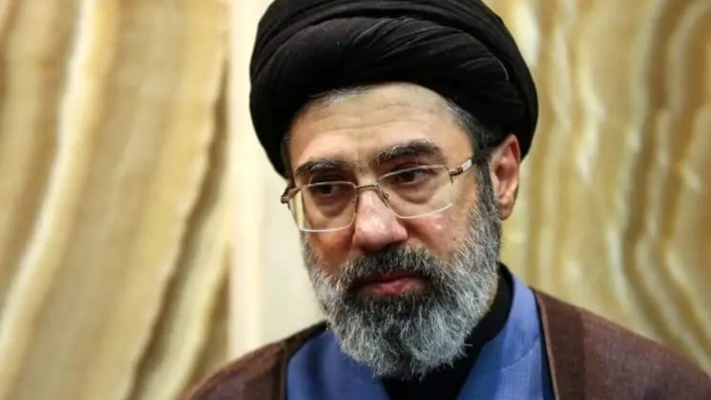
Iran's Supreme Leader Khamenei Killed in US-Israel Strikes at 86
Ayatollah Ali Khamenei, who ruled Iran since 1989, died in joint US-Israeli airstrikes, creating a leadership vacuum. Stories detail his rise from unlikely successor to Khomeini, ruthless rule, and succession questions involving son Mojtaba.
Photo Gallery
What Happened
- Khamenei killed: Iran's Supreme Leader Ayatollah Ali Khamenei, 86, died in US-Israeli strikes on Tehran (Feb 28, 2026), creating a leadership vacuum with no clear successor.
- Succession speculation: Son Mojtaba Khamenei tipped as potential heir despite constitutional issues; provisional leadership council announced to maintain regime control and continue war.
- Transition begins: Iran security official states Khamenei succession process starts Sunday.
- Background recap: Rose from weak president to ruler since 1989 after Khomeini's death; expanded clerical power, IRGC dominance, and anti-US stance while suppressing protests.
Timeline
- 1939: Khamenei born in Mashhad, Iran.
- 1960s-1970s: Arrested multiple times for anti-Shah activities.
- 1979: Islamic Revolution; Shah overthrown, Khomeini returns.
- 1981: Survives bomb assassination attempt, paralyzing right arm; elected president.
- 1989, June 3: Khomeini dies.
- 1989, June 7: Khamenei designated Supreme Leader by Assembly of Experts.
- 1989-2025: Rules Iran for 36+ years, expands IRGC, builds anti-US stance.
- 2022: Mahsa Amini protests.
- Late Dec 2025: Economic protests, deadly crackdown.
- 2026, Feb 17: Khamenei addresses crowd in Tehran.
- 2026, Feb 28 (Saturday): Killed in US-Israeli strikes on Tehran.
- 2026, Mar 1 (Sunday): State media reports death; transition process begins; provisional council forms; son Mojtaba eyed as successor.
Key Quotes
“Our message to Third World governments is that as long as the order of domination and the current situation exists, they should try to create unity among themselves: this is the best way to become powerful.”
— Ayatollah Ali Khamenei, UN General Assembly, September 1987
“It is about Islamic Iran’s independence, resistance, strength, and power. That is what this is about.”
— Ayatollah Ali Khamenei, on 2022 protests, October 2022
“We consider the US president criminal for the casualties, damages and slander he inflicted on the Iranian nation.”
— Ayatollah Ali Khamenei, on 2025 unrest (state media)
“The nuclear deal, as an experience, once again proved the pointlessness of negotiating with the Americans, their bad promises and the need not to trust America’s promises.”
— Ayatollah Ali Khamenei, on JCPOA
Opposing Views
- No clear opposing views: All stories uniformly portray Khamenei's biography (rise from "weak" successor to powerful ruler), legacy (ruthless, defiant, anti-US, suppressor of dissent), death (in US-Israeli strikes), and succession concerns (power vacuum, son Mojtaba or council). No counterarguments or conflicting perspectives present.
What Markets Believe
Historical Background
Historical Context: Khamenei's Rise and Iran's Theocratic System
Ayatollah Ali Khamenei (1939–2026) rose amid Iran's 1979 Islamic Revolution, overthrowing Shah Mohammad Reza Pahlavi. A Khomeini disciple jailed for anti-Shah activism, he survived a 1981 assassination attempt, served as president (1981–89), and succeeded Ayatollah Ruhollah Khomeini as Supreme Leader in 1989—despite initial doubts over his clerical rank (hojatoleslam, later elevated to ayatollah).
Path to Power: Post-revolution chaos (Iran-Iraq War 1980–88, internal purges) left a vacuum after Khomeini's death. Assembly of Experts appointed Khamenei, amending the constitution to prioritize political savvy over strict religious status under velayat-e faqih (guardianship of the jurist).
Consolidation: He empowered IRGC paramilitaries, built "Axis of Resistance" (Hezbollah, Houthis, etc.), defied US/Israel via nuclear program (JCPOA 2015, US exit 2018), and crushed protests (2009 Green Movement, 2022 Mahsa Amini uprising). This anti-Western stance escalated tensions, culminating in 2025–26 US-Israel strikes killing him amid war.
His 36-year rule entrenched theocracy, creating today's leadership vacuum and succession battle (e.g., son Mojtaba).
Economic Impact
Affected Sectors: Energy (Oil), Defense, Global Equities
Short-term Impacts
- Oil markets: Spike in crude prices (e.g., Brent >$100/bbl) due to Iran supply disruption risks amid leadership vacuum and ongoing US-Israel strikes; volatility up 20-30%.
- Defense stocks: Gains for US/Israeli firms (e.g., Lockheed, RTX +5-10%) on escalation fears.
- Geopolitics: Safe-haven flows boost gold (+3%), USD; equities dip 1-2% (S&P 500).
Long-term Impacts
- Potential regime shift could ease sanctions, stabilizing oil (~$70-80/bbl) if moderates prevail; prolonged chaos risks Strait of Hormuz blockade, +15% global energy costs.
- Broader economy: Inflationary pressure on commodities; MENA tourism/transport down 10-20%.
X Discussion Summary
Minimal discussion on X; only informational posts from news outlets @The Times Of India (profiling Mojtaba Khamenei as influential/opaque figure tied to security) and @africanews (recapping Ali Khamenei's leadership since 1989). No user reactions, debates, or sentiments observed.
Nostr Discussion Summary
Summary of Nostr Discussion on Khamenei's Death
Nostr posts primarily share news links reporting Ayatollah Ali Khamenei's death (aged 86) in an alleged Israeli bombing, framing it as a pivotal event for Iran.
Main Themes:
- Rise to Power: Recurring focus on Khamenei's unlikely succession after Khomeini (1989), from "weak" figure to "ruthless leader" and "architect of modern Iran" (Posts 1,2,6,7).
- Succession Questions: Speculation on process and candidates like Ali Larijani (Posts 3,4,5).
- Legacy Perspectives: Mixed—praise as "guardian of Islamic identity" (Sputnik, Post 7) vs. criticism for "defiance and brutality" (Post 9); neutral obituaries (Post 8).
Notable Voices/Insights: Sputnik's laudatory tone contrasts Western views; community shares archives for verification. Minimal debate—mostly aggregation, no heated reactions or unique Nostr takes. Common opinion: Historic shift ahead for Iran.
Bluesky Discussion Summary
Summary of Bluesky Discussion on Khamenei's Death
Main Themes & Sentiments: Posts focus on news sharing (AP, Irish Times, TVP World), Khamenei's biography as brutal theocratic ruler (anti-West, suppressed dissent, proxy wars), pronunciation corrections (@Tim Carmody thread), and succession amid US/Israel strikes. Sentiments neutral/informative; some anti-regime ("defiance and brutality," no real change).
Notable Accounts/Perspectives:
- @Tim Carmody: Educational thread distinguishing Khomeini/Khamenei, pronunciation (rhymes with Aquemini), cultural notes—sparked light replies (e.g., learning Farsi/Mandarin).
- @Voice4Justice, @Torr Leonard: Detail killing in Israeli strike, revolution role.
- @Ranked News, @US Political Politics News: Succession contenders, power vacuum.
Common Reactions: Factual recaps, obituaries; minimal debate—mostly amplification of his 36-year rule's end. No strong joy/outrage; one skeptical ("new boss, same as old"). ~15 posts, low engagement.
Full story
Ayatollah Ali Khamenei, Iran's supreme leader since 1989 and the architect of its theocratic system, was killed at age 86 in joint U.S.-Israeli airstrikes on Tehran on February 28, 2026. The strikes, described by U.S. President Donald Trump as the "opening salvo" of a major operation, also reportedly claimed the life of former President Mahmoud Ahmadinejad. Iranian officials confirmed Khamenei's death early Sunday, announcing that a transition process would begin that day amid a leadership vacuum, with no designated successor. Khamenei rose from humble clerical origins to become one of the most consequential figures in Iran's post-revolutionary history. Born on April 19, 1939, into a clerical family in Mashhad, he studied at seminaries in Mashhad, Najaf, Iraq, and Qom under mentors including Ayatollah Ruhollah Khomeini. In the 1960s and 1970s, he opposed Shah Mohammad Reza Pahlavi, enduring multiple arrests and torture by the Savak secret police. Following the 1979 Islamic Revolution, which ousted the Shah, Khamenei ascended rapidly: he served on the Islamic Revolutionary Council, as a lawmaker, deputy defense minister, and Tehran Friday prayer leader. A 1981 bomb attack by the Forqan Group at a mosque left him paralyzed in his right arm. He won Iran's presidency in 1981 with 95% of the vote in an uncontested election, backed by rivals including future Prime Minister Mir-Hossein Mousavi. After Khomeini's death on June 3, 1989, the Assembly of Experts named Khamenei supreme leader, despite his initial protests that he was a "minor seminarian" unworthy of the role under velayat-e faqih doctrine. Constitutional changes emphasized political acumen over strict religious rank, enabling his lifelong tenure. Khamenei's 36-year rule unfolded amid wars, protests, and geopolitical shifts. Early on, as president, he navigated the Iran-Iraq War (1980-1988), which killed an estimated one million. At the 1987 UN General Assembly, he urged Third World unity against U.S. "domination," saying, "This is the best way to become powerful." Assuming supreme leadership in 1989 amid the Cold War's end, he clashed with pragmatic President Ali Akbar Hashemi-Rafsanjani in the 1990s. Reformist Mohammad Khatami's 1997 election tested him further; Khamenei balanced conservatism against liberalization efforts. He aligned with hardliner Mahmoud Ahmadinejad post-2005, endorsing his disputed 2009 reelection amid Green Movement protests—the largest dissent since 1979. Economic unrest flared in 2017, 2019, and late 2025, with Khamenei blaming foreign powers. The 2022 Mahsa Amini protests, sparked by her death in morality police custody, drew his retort: "It is about Islamic Iran’s independence, resistance, strength, and power." Nuclear tensions peaked with the 2015 Joint Comprehensive Plan of Action (JCPOA), which Khamenei called "heroic flexibility" but later decried after Trump's 2018 withdrawal: "The nuclear deal... proved the pointlessness of negotiating with the Americans." Regionally, he built the "Axis of Resistance"—Hezbollah, Hamas, Houthis, Syrian allies—but it unraveled post-October 7, 2023, with Hassan Nasrallah's assassination, Bashar al-Assad's fall, and Iran's 12-day war with Israel in June 2025. The fatal U.S.-Israeli strikes on February 28, 2026—a "Saturday blast" echoing his 1981 survival—targeted Tehran, per state media and AP reports. Iranian security officials vowed continuity, with a provisional leadership council forming to "secure the regime's hold on power and continue the war," as one analysis noted. Thousands mourned in Tehran streets, per Middle East Eye. Son Mojtaba Khamenei, an opaque IRGC-tied figure, emerged as a frontrunner despite constitutional barriers requiring high clerical rank. State media quoted Khamenei-era officials decrying the attack as "brutal aggression." Internationally, Trump hailed it as a blow to Iran's anti-U.S. stance. Analyst Andrew Thomas wrote in News24 that Khamenei "prioritised his survival... above all else," blending defiance and brutality. Reformists like Khatami's allies stayed silent, while exiles hoped for change. Khamenei's death creates a profound power vacuum in the world's only theocratic state, established in 1979. The IRGC, elevated as his paramount force alongside an expanded Shiite clerical class, may dominate succession via the Assembly of Experts. Scenarios include Mojtaba's rise, a council-led interim, or factional strife fracturing the regime. Escalating U.S.-Israeli-Iran conflict risks wider war, unraveling Iran's regional influence after Axis losses. Domestically, suppressed protests could reignite amid economic woes and war. Globally, it reshapes Middle East dynamics: nuclear talks stall, proxies weaken, and rivals like Saudi Arabia gain. As one obituary noted, Khamenei "fought hard to prevent modernization," leaving Iran at a crossroads—regime survival versus revolutionary collapse.