
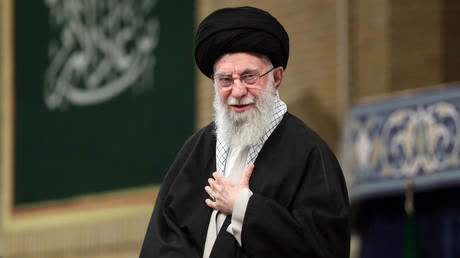
Khamenei Killed in US-Israel Strikes: Iran's Succession Battle
Iran's Supreme Leader Ayatollah Ali Khamenei was killed in US-Israeli airstrikes, sparking a power vacuum and urgent succession race. Contenders include son Mojtaba, Hassan Khomeini; IRGC role key amid fears of collapse or hardline continuity.
Photo Gallery
What Happened
- US and Israel launch strikes on Iran, killing Supreme Leader Ayatollah Ali Khamenei and ~40 senior regime figures.
- Power vacuum emerges, triggering Iran's succession process amid ongoing bombardment.
- Transitional leadership forms: President Massoud Pezeshkian, judiciary head Gholamhossein Mohseni Ejei, and Guardian Council member lead interim government.
- Key successors debated: Mojtaba Khamenei (son), Hassan Khomeini (grandson), Alireza Arafi, Reza Pahlavi; IRGC pushes militarized continuity.
- Iran enters survival mode, with clerics convening Assembly of Experts; universities shut, security tightened, internet curbed.
- Successor announcement delayed due to US/Israeli threats to target new leader; no regime collapse, protests limited.
Timeline
- Jan 30, 2026: US considers strikes on Iran over protest suppression (Story 1).
- Mar 1, 2026 (Saturday): Khamenei killed in US-Israeli strikes; ~40 senior leaders also die; marches in Basra (Stories 5, 8, 10, 14, 17, 23, 25, 39, 49, 58, 70, 78). Transitional govt announced: Pres. Pezeshkian, judiciary head Ejei, Guardian Council lawyer (Story 53).
- Mar 2, 2026: Succession discussions intensify; Mojtaba Khamenei frontrunner; US sinks Iranian warship (Stories 33, 70, 74).
- Mar 3, 2026: Israel threatens to target new leader; clerics convene (Stories 74, 78).
- Mar 4, 2026: Iran delays successor announcement due to US/Israel threats (Stories 89, 91).
Key Quotes
"The complexities of Iran's ruling system, the ideological nature of its support base, and the power of its Revolutionary Guards make it hard to predict its resilience or vulnerability."
— Reuters explainer
"Analysts said the immediate signs point less to collapse than to hardening continuity, at least for now, as security institutions close ranks."
— Unattributed analysts (Story 10)
"In order for ordinary Iranians to take charge of their country, this IRGC apparatus must be dismantled."
— Kasra Aarabi, United Against Nuclear Iran (Story 92)
"It's only the second time since the 1979 Islamic Revolution that a new supreme leader is being chosen."
— Multiple reports
Opposing Views
US/Israel Perspective
Strikes aim for regime change; killing Khamenei creates power vacuum for Iranian uprising, democracy (e.g., Trump urging protests; Reza Pahlavi as option).
Iranian Regime Perspective
Regime resilient; succession via Assembly of Experts ensures continuity (e.g., Mojtaba Khamenei, Hassan Khomeini as moderate/heir); IRGC hardens control, survival mode amid war.
Analyst Warnings
No swift collapse; risk of more aggressive/militarized leadership (e.g., IRGC dominance, radicalization); no popular uprising yet, internal rivalries over external pressure.
What Markets Believe
Historical Background
Iran's Theocratic System Origins
Iran's power structure stems from the 1979 Islamic Revolution, which overthrew Shah Mohammad Reza Pahlavi's monarchy. Ayatollah Ruhollah Khomeini established the velayat-e faqih (Guardianship of the Islamic Jurist), creating the unelected Supreme Leader as ultimate authority over military, judiciary, media, and policy. Khomeini ruled until 1989; Ali Khamenei succeeded him, elevated despite modest clerical credentials.
Key Institutions
- Assembly of Experts (88 clerics) selects/appoints Supreme Leader.
- Guardian Council vets candidates, ensuring ideological loyalty.
- IRGC (Revolutionary Guards), founded post-revolution, enforces regime control, suppresses dissent (e.g., 2022 Mahsa Amini protests), and runs parallel economy/military.
Khamenei's 35+ year rule centralized power, sidelining reformists. His death triggers rare succession—only second since 1979—via Assembly, amid U.S.-Israeli strikes exploiting recent protests and nuclear tensions, risking IRGC dominance or fracture.
Economic Impact
Affected Sectors: Energy (Oil), Defense, Global Equities
Short-term Impacts
- Oil markets: Spike in Brent/WTI prices (10-20%+ surge) due to Strait of Hormuz risks, supply disruptions; benefits producers (Saudi, US shale).
- Geopolitical risk premium: Stock selloff in MENA-exposed firms; safe-havens (gold, USD, Treasuries) rally.
- Defense stocks: Boeing, Lockheed surge on escalation fears.
Long-term Impacts
- Regime uncertainty: Potential IRGC hardliner succession sustains sanctions, caps Iran's oil exports; favors OPEC+ balance.
- Broader economy: Prolonged conflict risks global recession (2-3% GDP drag via energy); regime moderation unlikely boosts trade.
X Discussion Summary
Summary of X Discussion on Iran's Supreme Leader Succession
Main Themes & Sentiments: Discussion centers on uncertainty in Iran's theocratic succession process post-Khamenei's reported death. Neutral-analytical tone prevails, focusing on systemic mechanics, potential candidates (e.g., son Mojtaba), and impacts of recent attacks.
Notable Accounts: @The Japan Times, @National Interest (featuring @MahmoudianArman), @FRANCE 24—major news outlets driving the convo with article links.
Common Opinions/Reactions: Consensus on complexity of leader selection; speculation on family succession vs. traditional mechanisms. Minimal debate; mostly informative shares, no strong polarized reactions.
(Low volume: 4 posts, primarily news RTs/shares.)
Chars: 478
Nostr Discussion Summary
-
No substantive discussion or reactions: Nostr posts are almost entirely links/shares to news articles on Khamenei's death (assassination/strike), succession (e.g., Mojtaba Khamenei, interim council), risks (regime collapse, escalation, hardline shift), and explainer pieces from Al Jazeera, NYT, CFR, etc. Minimal original analysis; one post notes Mojtaba's demeanor implying war escalation, another shares Mossad-linked satire video. Lacks debates, opinions, or community insights.
Bluesky Discussion Summary
Main Themes
- Succession Uncertainty: Dominant focus on Iran's process (Assembly of Experts, interim council, potential successors like Khamenei's son or moderates). News shares from @FRANCE24, @Al-Monitor, @EUROPE SAYS.
- Power Vacuum & Stability: Fears of IRGC dominance, no regime collapse, escalation risks (e.g., nuclear program, retaliation). Analysts like Nicole Grajewski, @Caio Almendra emphasize institutional resilience.
- Regional Fallout: Concerns over instability, civil war, U.S./Israel interventions paralleling Iraq/Afghanistan failures.
Sentiments
Pessimistic overall—skepticism of quick change, warnings of wider war or hardliner continuity. Some hope for reform/public desire (@Aristogitone), but caution prevails.
Notable Accounts/Perspectives
- @Caio Almendra: Detailed gov't structure thread, downplays "decapitation."
- @Rolf Meier: Al Jazeera analysis on militarized escalation.
- @Singerella: Critiques interventionism, power vacuum risks.
- Debates: Hardliner vs. moderate successor; Reza Pahlavi restoration (@Dr. Mark P. Barry).
Common opinion: No easy win; regime endures, conflict may intensify.
Full story
Iran's Supreme Leader Ayatollah Ali Khamenei was killed in joint U.S.-Israeli airstrikes on March 1, 2026, alongside about 40 other senior regime figures, plunging the Islamic Republic into a leadership vacuum amid ongoing bombardment. A transitional council comprising President Massoud Pezeshkian, judiciary head Gholamhossein Mohseni Ejei, and a Guardian Council lawyer has assumed interim control, as Iran's Assembly of Experts—88 Shiite clerics—prepares to select a successor in a process untested during wartime. The strike has heightened regional tensions, with analysts warning of potential instability or a hardened regime response. Iran's theocratic system, established after the 1979 Islamic Revolution, vests ultimate authority in the Supreme Leader, a role filled only twice: first by Ayatollah Ruhollah Khomeini until 1989, then Khamenei for nearly 37 years. The leader oversees the military, judiciary, state media, and foreign policy, appointing key figures like the heads of the Revolutionary Guards (IRGC) and Guardian Council while serving as a religious and ideological arbiter. The IRGC, a parallel military force with economic and political clout, has long been the regime's backbone, suppressing protests—including a deadly crackdown this January that killed thousands, per reports—and projecting power via proxies. Succession is managed by the Assembly of Experts, but wartime chaos, internet curbs, university closures, and security deployments complicate the process, which Tehran had planned for a peaceful transition but not open conflict. The crisis unfolded rapidly. On March 1, U.S. and Israeli strikes targeted Iran's leadership, confirming Khamenei's death via state media and sparking protests in Iraq's Basra with images of marchers (Reuters/Mohammed Aty). By March 2, the transitional trio was announced on state television, as reports emerged of Khamenei's son Mojtaba—a former frontrunner with IRGC and Basij ties—as a top contender, though some sources later claimed he was "eliminated." Hassan Khomeini, 53-year-old grandson of the revolution's founder and seen as a relative moderate, also surfaced prominently alongside figures like Alireza Arafi and Ali Larijani, who could tilt Iran toward militarization. On March 3, Israel warned it would target any new leader, prompting Iran to postpone Khamenei's funeral and delay successor announcements, per The New York Times citing Iranian officials. U.S. President Donald Trump urged Iranians to "seize power," referencing January protests, while strikes continued, including a U.S. submarine sinking an Iranian warship off Sri Lanka. Clerics convened amid IRGC-civilian rivalries, with no uprising despite hopes from exile Reza Pahlavi. Reactions vary sharply. Regime loyalists mourned Khamenei, with posters at anti-U.S.-Israel protests (Reuters), while Iranian-Americans expressed divided views—some celebrating potential freedom, others fearing chaos (KOMO). Analyst Behnam Ben Taleblu of the Foundation for Defense of Democracies told CBS News the strikes killed key figures but questioned regime change without ground forces. Former NATO vice chief Michel Yakovleff told France 24 the killing tests "the limits of American power," predicting no swift collapse. Diplomat Donald Heflin said regime change is "unlikely," urging focus on top job holders. French-Iranian sociologist warned of IRGC-civilian rivalries, and war studies lecturer Samir Puri noted no popular uprising post-strikes. IRGC hardliners show "no signs of surrender," per reports, potentially yielding bloodier successors. Exiles like Gilda Sahebi wrote in Eurones that Iranians seek democracy but face the regime's force monopoly. United Against Nuclear Iran's Kasra Aarabi told Bloomberg the IRGC's "invisible state" ensures continuity unless dismantled. The implications are profound. Immediate continuity appears likely, with Tehran in "survival mode" closing ranks despite losses, per analysts—potentially birthing a more aggressive IRGC-dominated leadership rather than collapse. A new leader inheriting Khamenei's role amid war could entrench radicalization, expand battlefield proxy conflicts, or prompt nuclear escalation, though U.S. bets on internal rupture. Economically strained by sanctions, Iran risks chaos from a power vacuum, but experts like those in Bloomberg debates (Trita Parsi, Fereidun Fesharaki) see entrenched clerics blocking figures like Rouhani or Pahlavi. Regional instability looms, with Sunni states wary and the Middle East "changed forever" (NYT), even if another ayatollah rises. Without boots on the ground, per analysts, true regime change hinges on Iranian dynamics, not external pressure alone—marking a high-stakes test for the Islamic Republic's resilience after 47 years.