
Iran War Triggers Global Gas Crisis, Prices Surge 50%
Escalating Middle East conflict halts Qatar LNG production after Iranian strikes, shuts Israeli and Saudi facilities, spikes European/Asian gas prices up to 52%. China halts fuel exports; markets brace for shortages rivaling 2022 Ukraine crisis. (178)
Photo Gallery
What Happened
- US-Israel strikes on Iran trigger retaliatory Iranian drone/bomber attacks on Qatar, Saudi Arabia, UAE energy facilities.
- Qatar halts LNG production at Ras Laffan and Mesaieed after strikes, disrupting ~20% of global LNG exports (mostly to Asia).
- Saudi Arabia shuts largest refinery; Israel suspends Leviathan gas field (Chevron force majeure); Gulf oil/gas output halts.
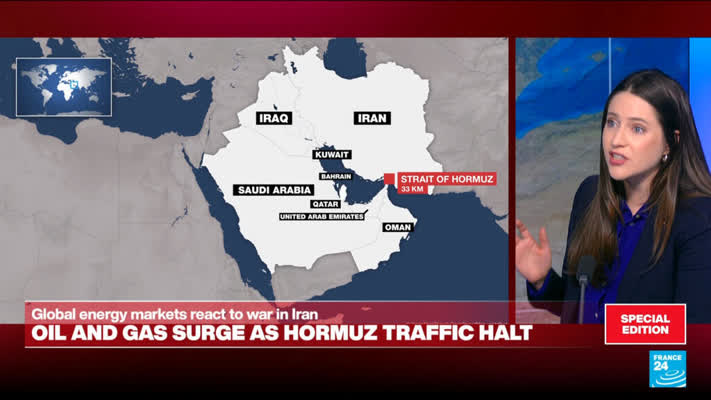
- Strait of Hormuz traffic paralyzed, bottlenecking 20% of global LNG and key oil routes.
- Global gas prices surge (Europe +40-52%, Asia jolted; LNG tanker rates double to $200k/day).
- Asia scrambles: China halts fuel exports, India raises LPG prices, hoarding/shortages/queues emerge; refiners face feedstock cuts.
- Europe faces energy shock: LNG rerouted to Asia, low reserves heighten crisis risks; Russia threatens gas halt.
- Wider impacts: Fertilizer/food shortages, US LNG gains, calls for renewables; IEA warns of global LNG "fight".
Timeline
- Weekend (pre-Monday): US and Israel attack Iran, killing Supreme Leader; Iran retaliates with strikes on Gulf energy sites.
- Monday (March 2): Iranian drones strike Qatar's Ras Laffan/Mesaieed; QatarEnergy halts LNG production; gas prices spike 40-52% in Europe/Asia.
- Monday: Qatar downs 2 Iranian jets; strikes hit Saudi refinery, UAE; Kuwait downs US jets by mistake.
- Monday: Israel shuts Leviathan gas field; Chevron declares force majeure.
- Tuesday-Wednesday (March 3-4): Qatar LNG blackout confirmed; Strait of Hormuz traffic halts; LNG tanker rates double; Saudi/Israeli fields offline.
- Wednesday: Putin warns of halting Russian gas to Europe.
- Thursday (March 6): China halts fuel exports; Asia fuel hoarding, shortages begin.
- Later week: India raises LPG prices; IEA warns of LNG surge; Asia diverts cargoes.
Key Quotes
"If the crisis continues this way, the Asian buyers and the European buyers will need to compete for the LNG which will get scarcer and scarcer."
— IEA Executive Director Fatih Birol
"Russia could halt gas supplies to Europe right now amid a spike in energy prices triggered by the Iran crisis."
— President Vladimir Putin
"Due to recent geo-political developments impacting LNG supply routes, ATGL has received upstream gas curtailment, leading to operational constraints."
— Adani Total Gas
"Energy markets face ‘heart attack’ as Gulf infrastructure targeted in Iran conflict."
— News headline (Morocco World News)
Opposing Views
Main Opposing Views
Crisis Severity vs. Market Resilience
- Severe, Prolonged Disruption: Many stories warn of "worst disruption since 2022," with Qatar halting LNG (20% global exports), Strait of Hormuz closure, 50%+ price spikes in Europe/Asia, force majeure, export halts (e.g., China), and food/fertilizer shortages (stories 1-35, 39, 45, 52-74).
- Temporary/Market Adjustment: U.S. gas insulated (41); prices pull back amid de-escalation talks (40); Russia sees demand boost (42, 65-66).
Regional Impacts
- Asia Hit Hardest: 82% Qatar clients Asian; fuel hoarding, price hikes, LPG rises in India (8, 26-28, 35, 54-61, 64, 68-75).
- Europe More Vulnerable: Low reserves, rerouted tankers, echoes of Ukraine crisis (18, 28, 31, 36-38, 72).
Geopolitical Suppliers
- U.S./Australia Benefit: LNG arb to Asia, windfalls for exporters (13, 34, 80).
- Russia Gains Leverage: Rising demand, threats to halt Europe supplies (42, 56, 65-66).
Energy Transition
- Fossil Dependency Exposed: War highlights lag in renewables (36-38).
- China's Resilience: Energy self-reliance/transition mitigates crisis (62).
Historical Background
Strait of Hormuz's Strategic Role
The Strait of Hormuz, a 21-mile-wide chokepoint between Iran and Oman, handles ~20% of global LNG exports and 21% of oil trade. Iran has threatened closures during past tensions (e.g., 2019 tanker attacks, 1980s Tanker War), but never fully executed, spiking prices via fear.
Post-2022 Energy Vulnerabilities
Russia's 2022 Ukraine invasion cut piped gas to Europe (40% of supply), forcing a scramble for LNG. Europe pivoted to Qatar (world's top exporter, ~20% global LNG), Asia (82% of Qatar's clients), and US cargoes. Reserves are now low, amplifying risks from Gulf disruptions.
Path to Current Crisis
US/Israeli strikes on Iran prompted retaliation: drone attacks on Qatar's Ras Laffan/Mesaieed (LNG halt), Saudi refineries, Israel's Leviathan field shutdown. This echoes 2022 shocks, redirecting cargoes to Asia, doubling tanker rates, and surging prices 40-50%—exposing persistent import dependencies despite diversification efforts.
Technical Details
Key Technical Details
QatarEnergy LNG Halt
State-owned QatarEnergy (nearly 20% of global LNG exports) suspended production at Ras Laffan and Mesaieed facilities after Iranian drone strikes; world's largest LNG export plant affected, halting all output.
Strait of Hormuz Transit
20% of global LNG exports pass through this chokepoint; traffic "all but halted," blocking oil/gas shipments.
Price Surges
European wholesale gas: 40-52% jump (Dutch TTF benchmark); LNG tanker rates doubled to $200,000/day; Ukraine gas: 20% to $637/1,000 m³.
Leviathan Field
Israel ordered Chevron to shut Leviathan offshore gas field (force majeure declared); second disruption in <1 year.
Other Impacts
Saudi Arabia's largest refinery hit; Qatar downed 2 Sukhoi Su-24 bombers; 82% Qatar LNG clients in Asia; China halted diesel/gasoline exports.
Economic Impact
Affected Sectors: Energy (LNG, Oil, Gas), Utilities, Manufacturing, Petrochemicals, Agriculture (Fertilizers), Shipping
Short-term Impacts
- Gas/LNG prices surge 40-52% (Europe's TTF, Asia): Qatar (20% global LNG) halts production after Iran strikes; Strait of Hormuz (20% LNG exports) disrupted. Heightens competition Asia-Europe, reroutes US cargoes.
- Oil prices spike: Saudi/UAE refineries hit; Asia faces shortages, hoarding, queues (India LPG hikes). China halts fuel exports.
- Freight rates double; force majeure declarations (Chevron Leviathan, Gujarat Gas).
Long-term Impacts
- Boosts US/Australia/Russia LNG exporters; accelerates renewables push amid fragility.
- Inflation risks, industrial curbs (India, Asia); potential GDP drag if prolonged (esp. energy importers).
X Discussion Summary
Minimal discussion on X; only one post from @NaturalGasIntel (energy news account) highlighting Iran war's impact on natural gas futures due to disrupted LNG production/transport in the Middle East, causing global/U.S. price ripples. No user reactions, debates, or sentiments noted.
Nostr Discussion Summary
Nostr Discussion Summary: Iran War's Energy Disruptions
Main Themes: Surging energy prices (oil >$150/bbl, LNG spikes), supply chain chaos via Strait of Hormuz/Qatar halts, Europe/Asia vulnerabilities, and global economic risks.
Key Perspectives:
- Europe/Asia Hit Hard: Posts highlight TTF gas +40%, Asia's LNG shock from Qatar disruptions (SCMP links).
- China's Resilience: Energy transition cushions impact via self-reliance (op-ed shared).
- Market Warnings: Qatar minister predicts world economy collapse; analysts (JPMorgan, Goldman) forecast shortages, GDP hits.
Notable Voices/Insights:
- @VET-Protocol breakdown on oil/LNG tightening, Europe alternatives, China's SPR releases (reply agrees, adds nuance).
- Recurring: Geopolitical escalation (US-Israel-Iran), force majeure, historic parallels to COVID/Russia-Ukraine spikes.
Community Consensus: Alarm over energy security; debates on duration (4+ weeks = crisis), no optimism for quick fix.
Bluesky Discussion Summary
Summary of Bluesky Discussion on Iran Conflict & Oil Markets
Main Themes & Sentiments:
- Economic Disruptions: Heavy focus on oil/LNG supply risks (Qatar to Europe, Iran exports), potential price crashes post-conflict, and long-term instability. Mixed sentiments: short-term fears (Europe energy crisis), optimism for cheaper oil via regime change.
- Geopolitical Ripples: Benefits to Russia (hurting Ukraine), Dubai real estate slump; calls for faster decarbonization to reduce oil dependency. Concern over Iran's shipping lane leverage on US politics. Overall anxious, speculative tone.
Notable Accounts/Perspectives:
- Alexander Clarkson: Prices drop post-op, but Iran's exporter role at risk.
- Cade Timbers: Regime change floods market, crashes prices.
Common Opinions/Debates:
Consensus on global vulnerability to oil states; debate on regime change outcomes (boom vs. chaos). ~450 chars
Full story
QatarEnergy's suspension of liquefied natural gas (LNG) production at its Ras Laffan and Mesaieed facilities following Iranian drone strikes has triggered a 50-52% surge in European wholesale gas prices, marking the most severe disruption to global gas markets since Russia's 2022 invasion of Ukraine. Strikes have also hit Saudi Arabia's largest refinery and forced Israel's Leviathan gas field offline, with 20% of global LNG exports transiting the now-virtually closed Strait of Hormuz. Asian buyers, who account for 82% of Qatar's clients including India and China, are scrambling for alternatives amid soaring tanker rates and force majeure declarations. The Middle East has long been a linchpin of global energy security, producing a fifth of the world's LNG through neighbors like Qatar and serving as a vital chokepoint via the Strait of Hormuz. QatarEnergy, responsible for nearly 20% of global LNG exports, operates the world's largest export plants at Ras Laffan, making any halt seismic. Europe, still recovering from the 2022 Ukraine crisis that spiked prices and exposed Russian gas dependency, has pivoted to LNG imports—now largely from Qatar—while Asia's economies, from India's refineries to Japan's power plants, rely heavily on Gulf supplies despite diversification efforts. Tensions escalated after U.S.-Israeli strikes on Iran, killing its Supreme Leader and prompting Tehran's retaliation across the Persian Gulf. The crisis unfolded rapidly over the weekend into Monday, March 2. U.S. and Israeli forces launched attacks on Iranian targets, triggering Iranian drone and bomber strikes on Qatar's key gas bases, Saudi refineries, and UAE facilities. QatarEnergy immediately halted operations, declaring the shutdown indefinite; Qatar's air force downed two Iranian Sukhoi Su-24 bombers. Israel's government ordered Chevron to suspend Leviathan production—the second such halt in a year due to Iran hostilities—with partner NewMed Energy citing security guidance. Chevron declared force majeure. Saudi Arabia shuttered its biggest refinery, while Kuwait's defenses mistakenly downed three U.S. F-15 jets. By midday Monday, LNG tanker rates doubled to $200,000 per day, three cargoes diverted from Europe to Asia, and the Strait saw near-zero traffic. Qatar's outage alone idled nearly a fifth of global LNG supply, with Oman and UAE exports also curtailed. Stakeholders reacted swiftly amid the chaos. IEA Executive Director Fatih Birol warned after meeting European Commission President Ursula von der Leyen: "If the crisis continues this way, the Asian buyers and the European buyers will need to compete for the LNG which will get scarcer and scarcer," predicting price surges. Qatar's Rashid Al-Mohanadi noted to Bloomberg that Asia had become more profitable than Europe post-shutdown. Russia's Vladimir Putin threatened to halt remaining gas flows to Europe, tying it to EU sanctions. In Asia, India's Adani Total Gas cited "upstream gas curtailment" for price hikes on cooking gas—its first in a year as the world's second-largest LPG importer—while Gujarat Gas declared force majeure. China ordered top refiners to suspend diesel and gasoline exports to prioritize domestic needs, excluding jet fuel. Experts like Alexey Grivach foresaw a "global fight for LNG," with Russia eyeing Asian sales. U.S. LNG firms, including Venture Global, positioned for windfalls as arbitrage to Asia heated up. The war risks a prolonged energy shock, with European reserves at historic lows and Asia drawing down stockpiles amid queues and hoarding from Thailand to India. Fertilizer prices have jumped, stoking global food shortage fears from disrupted Gulf production. Oil nearing $100/barrel threatens petrochemicals and inflation; Ukraine's gas prices rose 20% to $637 per 1,000 cubic meters. A "battle for LNG" could exacerbate Europe's vulnerability—despite solar/wind gains, fossil import lags persist—while U.S. markets remain somewhat insulated. Central banks in Asia face rate-cut dilemmas amid capital flight risks. Longer-term, the crisis bolsters renewables' case, as one analyst noted: "The Iran war is shaking the global energy system and with it Earth's climate future." De-escalation talks could ease pressures, but sustained conflict may redraw trade flows, favoring U.S. and Russian suppliers and hiking costs for consumers worldwide.