
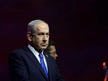
Netanyahu Vows to Eradicate Iran Regime in Escalating War
Israeli PM Netanyahu, amid US-backed strikes killing Iran's leader, promises "many surprises" to destroy Tehran's nuclear threat, enable regime change, and eyes snap elections as conflict spreads regionally with missile exchanges.
Photo Gallery
What Happened
- US-Israel launch strikes on Iran: Joint operation (Epic Fury/Roaring Lion/Rising Lion) targets nuclear sites, missiles, leadership; kills Supreme Leader Ali Khamenei.
- Iran retaliates: Missiles hit Israel (Beit Shemesh: 9 killed; Beersheba), US bases in Gulf/Arab states; Netanyahu escapes unhurt, thanks Modi.
- Netanyahu visits strike sites and airbase: Tours Beit Shemesh, Beersheba, southern airbase; meets US-Israeli pilots.
- Netanyahu vows escalation: War to "eradicate Iranian regime," gain air superiority (near-complete over Tehran); "many surprises" in next phase, won't take years.
- War expands: Israel hits Tehran airport, oil depot, Hezbollah in Lebanon; Iran strikes neighbors, apologizes.
- Netanyahu's statements: Strikes prevent "immune" Iranian nukes/missiles; hopes for Iranian uprising/regime change; thanks Trump for enabling action.
- Political context: Netanyahu accused of war for elections/survival; plans snap June vote if successful; opposition slams divisiveness.
- Diplomatic moves: Israel urges allies to cut Iran ties; suspects US secret talks with Tehran; Smotrich calls for prayers for US troops.
Timeline
-
Jan 26, 2026: Netanyahu attends Knesset session honoring Albanian PM (story 24).
-
Saturday (late Feb 2026): US-Israel strikes begin on Iran, killing Supreme Leader Khamenei; Israel hits nuclear/missile sites (stories 6, 14, 37, 51).
-
Post-Saturday: Iran retaliates with missiles on Israel, including Beit Shemesh (9 killed); Netanyahu visits site, predicts regime fall (stories 3,5,7,8).
-
March 2, 2026: Netanyahu visits Beit Shemesh again with Mossad head; says war "some time" but not years (stories 3,14).
-
March 5, 2026: Netanyahu visits southern airbase, meets US-Israeli pilots (stories 28,37).
-
March 6, 2026: Netanyahu visits Beersheba missile strike site, vows victory (story 34).
-
Week 1+ (early March): Israel gains air control over Tehran, hits leadership/nuclear sites; vows to eradicate regime "with all force" (stories 42-46,55).
-
Week 2 (mid-March): Second phase - strikes on Tehran oil depot/airport, Lebanon/Hezbollah; Netanyahu promises "surprises" (stories 27,39,41,49,50).
(Timeline inferred from dates, sequences like "Saturday start," "first week," "second week," visits. Total: 748 chars.)
Key Quotes
"The day is near when the Iranian people will be able to throw off the yoke of tyranny. This is a struggle for humanity."
— Benjamin Netanyahu (Beit Shemesh visit)
"If they have nuclear weapons, they will endanger humanity."
— Benjamin Netanyahu (Beit Shemesh disaster site)
"We have a systematic plan to eradicate the Iranian regime and achieve many other objectives."
— Benjamin Netanyahu (televised address)
"The reason that we had to act now is that after we hit their nuclear sites... they started building new sites... that would make their ballistic missiles programme and their atomic bomb programme immune within months."
— Benjamin Netanyahu (Fox News)
Opposing Views
View 1: Strategic Necessity Against Existential Threat
Netanyahu and supporters (e.g., stories 3-5, 7, 10-12, 16-18, 42-46, 52-55) frame the war as urgent to dismantle Iran's nuclear/missile programs, prevent "immunity" of sites, eradicate regime, foster Iranian uprising, and secure regional peace (e.g., Saudi normalization). Emphasizes US-Israel coordination, quick victory ("not years"), and humanity's benefit.
View 2: Political Opportunism for Survival
Critics (e.g., stories 1-2, 6, 9, 13, 19, 24-25, 29-31, 33, 35-36, 38) accuse Netanyahu of launching war for elections, distracting from Oct. 7 failures, judicial threats, and polls. Alleges exploiting pilots, dividing society, risking democracy/US bipartisan support, with chaos in Iran as acceptable domestic win.
View 3: Mixed Domestic/International Impact
Some note war boosts Netanyahu at home but harms Israel's global standing (38); others see unified "echo chamber" (31) or split society (25). Bennett supports goals but slams coalition divisiveness (29,52).
What Markets Believe
Historical Background
Iran's Nuclear Threat and Israel's Long-Standing Campaign
Israel has viewed Iran as an existential threat since the 1979 Islamic Revolution, when Ayatollahs seized power, exported radical Shia ideology, and began building regional proxies like Hezbollah (1982 founding) and Hamas support networks. Iran's covert nuclear program, exposed in 2002, accelerated under Mahmoud Ahmadinejad (2005-2013), who vowed Israel's destruction.
****Netanyahu's warnings intensified post-2015 JCPOA nuclear deal, which he called a "historic mistake," arguing it enabled Iran's bomb pursuit. Israel conducted covert ops (e.g., Stuxnet 2010, scientist assassinations 2020-2024) and struck proxies (Syria 2013+, Gaza 2023+). Oct 7, 2023 Hamas attack (1,200 Israelis killed) exposed Iran's "Axis of Resistance," leading to proxy escalations.
****By 2026, intel on Iran's "immune" underground nukes/missiles (per Netanyahu) and Khamenei's killing triggered US-Israel strikes ("Operation Roaring Lion"), aiming regime decapitation after failed diplomacy.
This fulfills Netanyahu's 30+ year strategy, shifting from containment to direct confrontation amid his domestic trials and 2026 elections.
Technical Details
Key Technical Details:
Iran's Nuclear/Ballistic Programs:
- Iran building new underground bunkers at nuclear sites and missile facilities, projected to become "immune" to attack within months (Netanyahu to Fox News).
- Previous strikes (pre-current war) hit nuclear sites and ballistic missile programs, but Iran persisted, starting new sites since June (Story 16).
Military Operations:
- US-Israel joint strikes (Operation Roaring Lion/Epic Fury/Rising Lion): Fully integrated multi-domain operations—first-ever allied effort targeting nuclear sites, weapons factories, missile launchers, Tehran airport, oil depot (Stories 10, 37, 42, 51).
- Israel claims near-complete control of Tehran's airspace after week 1 (Story 42).
- Phase 2: Targets underground missile sites (Story 27).
- Iranian retaliation: Missile strikes on Israel (Beit Shemesh: 9 killed; Beersheba), US bases in Gulf/Arab states (Stories 3,7,14,34).
Timeline & Scope:
- War began Saturday (pre-March 2, 2026) with attacks killing Iran's Supreme Leader Ali Khamenei (Story 14).
- Expected duration: "Some time" but not years (Netanyahu, March 2, 2026).
Strategic Assets:
- Bushehr nuclear plant spared, per Russia's concerns (Story 26).
Economic Impact
Affected Sectors: Energy, Defense, Global Markets
Short-term Impacts
- Oil prices surge: Iran strikes disrupt Gulf oil flows (e.g., Tehran depot hit), hitting US bases; Brent crude +10-20%, inflating energy costs worldwide.
- Defense stocks rally: US-Israel ops boost Lockheed, Raytheon (+5-15%); Israeli firms like Elbit gain.
- Market volatility: Equities dip 2-5% (S&P, Tel Aviv); safe-havens (gold, USD) rise amid escalation fears.
Long-term Impacts
- Regime change scenario: Iran chaos cuts OPEC supply, sustains high oil ($100+/bbl), aids Saudi normalization, boosts Mideast stability/trade.
- Geopolitical shifts: Reduced Iran nuclear threat lowers defense spending; reconstruction aids construction/energy sectors.
- Broader economy: Inflation pressures slow growth (0.5-1% GDP hit globally); successful war enables Israel snap elections, stabilizing policy.
X Discussion Summary
-
Minimal Discussion: The provided X posts consist solely of news shares from @JerusalemPost (3 posts) and @Faytuks (1 post) reporting Netanyahu's visit to the Beit Shemesh missile site and his statements predicting the Iranian people overthrowing their regime, framing it as a "struggle for humanity." One post speculates on Netanyahu advancing elections amid "Operation Roaring Lion."
-
Reactions: No user comments, debates, or sentiments present—purely factual reposts with no engagement noted.
Nostr Discussion Summary
Summary of Nostr Discussion on Netanyahu-Iran Tensions
Main Themes: Netanyahu's visit to a rocket impact site in Beit Shemesh, his vows of "swift and decisive" action against Iran (no endless war), support for Iranian regime overthrow, and contrasts between Israeli targeting of leadership vs. Iranian civilian strikes. Links to US/Trump involvement and diplomacy as "sham."
Perspectives & Recurring Viewpoints:
- Pro-Netanyahu/Israel: Posts highlight his defensive stance and optimism for Iranian liberation (Posts 2, 3, 4, 5, 11).
- Anti-Israel/Critical: Labels Netanyahu "war criminal," attributes war to him persuading Trump (Posts 1, 7, 8, 9).
- Geopolitical Notes: Suspected US-Iran talks (Post 6); Saudi prince calls it "Netanyahu’s war" (Post 7).
Debates/Insights: Minimal interaction; mostly news shares from Sputnik, TASS, Disclose.tv. Recurring: Netanyahu's words fuel Iranian claims of premeditated war. No deep community debate—primarily amplification.
Bluesky Discussion Summary
Summary of Bluesky Discussion on Netanyahu-Iran War News
Main Themes & Sentiments: Overwhelmingly critical of Netanyahu, portraying him as a long-time agitator for war with Iran (decades-long "desire," "War Whisperer"). Anti-Zionist/anti-Israel tones dominate, accusing him of lying about "existential threats," sabotaging US-Iran diplomacy (e.g., 2005 deal), and dragging the US/Trump into conflict. Sentiment: Hostile, cynical, no pro-Israel voices.
Common Opinions & Debates: Consensus on Netanyahu's hypocrisy (contradictory claims on Iran's nukes/missiles); debate implied on his truthfulness ("lying then or now?"). Links to articles reinforce narrative of premeditated aggression.
Notable Accounts: @msesq.bsky.social (US complicity via Trump); @All Power to the People (pro-Palestine framing); @Watchdog Progressive (historical UN speech context).
Minimal diversity; ~8 posts, all aligned.
Full story
Israeli Prime Minister Benjamin Netanyahu has vowed to press forward with a U.S.-backed military campaign against Iran, aiming to eradicate the regime and neutralize its nuclear threat, even as the conflict enters its second week with escalating regional strikes. The operation, which began with attacks on Tehran killing Supreme Leader Ali Khamenei, has drawn Iranian missile retaliation on Israeli cities like Beit Shemesh and Beersheba, where nine were killed in one strike, and prompted counterstrikes on U.S. bases in the Gulf. Netanyahu insists the war will take "some time" but not years, predicting it could empower Iranians to overthrow their government. The conflict stems from decades of tension over Iran's nuclear program and ballistic missile development, which Netanyahu has long portrayed as an existential threat to Israel and humanity. In a Fox News interview, he explained that Iran, undeterred by prior strikes, was racing to build underground bunkers that would render its nuclear sites "immune within months." This buildup, he claimed, necessitated urgent joint U.S.-Israeli action under Operation Roaring Lion (also called Epic Fury or Rising Lion in some reports), marking the first fully integrated multi-domain operations between the two allies. Netanyahu has framed the campaign as a response to Iran's role in funding proxies like Hamas, Hezbollah, and attacks post-October 7, 2023, including recent intelligence of large transfers to these groups. The war ignited on Saturday with U.S. and Israeli airstrikes on Tehran, eliminating Khamenei and hitting nuclear sites, weapons factories, and missile launchers. Iran retaliated with missiles targeting Netanyahu—whom he escaped unhurt—and strikes on Beit Shemesh (March 2, killing nine) and Beersheba (March 6). Netanyahu visited both sites, accompanied by Mossad head Roman Gofman at Beit Shemesh, declaring, "The day is near when the Iranian people will be able to throw off the yoke of tyranny. This is a struggle for humanity." Israel gained "near-complete control of Tehran’s skies," per Netanyahu, while expanding to Hezbollah targets in Lebanon and an Iranian oil depot and Tehran airport. He met U.S. and Israeli pilots at a southern airbase on March 5 and thanked India's Narendra Modi in a post-strike interview. By March 6, Netanyahu addressed the nation: "We have a systematic plan to eradicate the Iranian regime and achieve many other objectives," promising "many more surprises" in the next phase, including underground missile sites. Netanyahu has praised President Donald Trump's leadership, stating the strikes "wouldn't happen" without him and dismissing claims Israel dragged the U.S. into war, while predicting an "era of peace" and Saudi normalization. He thanked U.S. pilots indirectly via Finance Minister Bezalel Smotrich's call to "pray for the welfare of US service members." Critics, however, accuse Netanyahu of political motives. Ministers in his orbit admitted the looming 2026 elections and poor polls factored in, with one saying, "The road to the polling stations runs through Washington and Tehran." Likud sources suggest snap June elections if successful, shifting focus from domestic issues like ultra-Orthodox military exemptions. Former PM Naftali Bennett slammed the coalition for "delegitimizing" war opposers, while opposition leader Yair Lapid lamented a lack of debate, calling Israel an "echo chamber." Pilots risking lives for the strikes go unthanked, per detractors, amid Netanyahu's past denunciations of refuseniks. President Isaac Herzog highlighted "superbly close" U.S.-Israel coordination in a CBS interview. Israel's envoy to Russia noted strikes spared the Bushehr plant per Moscow's concerns. The campaign risks broadening into regional chaos, with Iran hitting Gulf states hosting U.S. bases and apologizing for neighbor strikes even as drones continue. Netanyahu suspects White House backchannel talks with Tehran, seeking clarification. Domestically, it bolsters his image—"Netanyahu is the great war leader of our age," per U.K.'s Telegraph—potentially aiding elections despite a polarized public. Abroad, it erodes bipartisan U.S. support, tying Israel to GOP extremes and hurting global standing, as analyst Aluf Benn warns a "failed state" in Iran may not yield safety without leadership change. Economically, oil markets jitter, and Israel urges allies to cut Tehran ties. Netanyahu bets on regime change via Iranian uprising, but endless escalation looms if goals shift, testing U.S. commitment and Israel's democracy amid coalition threats.