
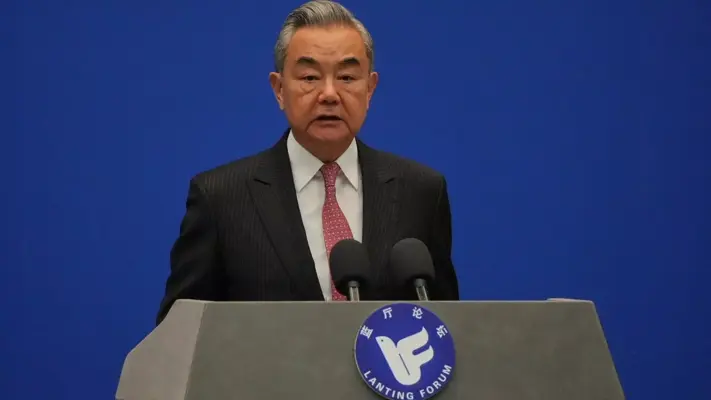
China Condemns US-Israel Strikes on Iran, Urges Ceasefire
China's Foreign Ministry calls US-Israel attacks "unacceptable," condemns Khamenei's killing as sovereignty violation, demands immediate halt to operations, respects Iran's integrity, evacuates 3,000+ citizens amid 1 death.
Photo Gallery
What Happened
- US and Israel strike Iran, killing Supreme Leader Ayatollah Ali Khamenei, confirmed by state media.
- US President hails Khamenei's death as justice, repeats regime change call.
- China condemns strikes as unacceptable violation of Iran's sovereignty, urges immediate ceasefire and talks.
- China's Wang Yi tells Russia's Lavrov attacks during US-Iran negotiations are "unacceptable," especially leader's killing.
- China's embassy in Israel advises citizens to evacuate to safer areas or flee to Egypt via Taba.
- China urges nationals in Iran to evacuate; over 3,000 evacuated, 1 Chinese citizen killed in Tehran.
- Iran retaliates with missiles/drones on Israel, Gulf states, British base in Cyprus.
- China supports Iran's sovereignty defense, holds talks with Iran, France, Oman, Saudi Arabia for de-escalation.
- China warns of Hormuz threats, energy risks, and Middle East instability from war.
Timeline
-
Saturday (Feb 28, 2026): US-Israel strike Iran during negotiations, killing Ayatollah Khamenei (state media confirms).
-
Saturday: China MFA statement urges ceasefire, respects Iran's sovereignty.
-
Sunday (Mar 1): China FM Wang Yi tells Russia FM Lavrov attacks "unacceptable"; embassy in Israel advises citizens to evacuate or flee to Egypt.
-
Monday (Mar 2): Conflict enters day 3; China FM spokeswoman Mao Ning calls for ceasefire/diplomacy; 1 Chinese killed in Tehran, >3,000 evacuated from Iran; Wang Yi phones Iran, France, Oman FMs urging halt/escalation prevention.
-
Later (Mar 8+): Wang Yi warns of spreading war flames, against regime change.
Key Quotes
US President (on Ayatollah Ali Khamenei's death):
“Khamenei’s death is ‘justice for the people of Iran’” as he repeats call for regime change.
China's Foreign Minister Wang Yi (to Russia's Sergei Lavrov):
“attacks by the United States and Israel on Iran during U.S.-Iran negotiations were 'unacceptable' [...] the 'blatant killing of a sovereign leader' [...] unacceptable.”
China's Foreign Minister Wang Yi:
“supports Iran in defending its sovereignty” and urged the US and Israel to “immediately cease military operations”.
Foreign ministry spokeswoman Mao Ning:
“The most urgent task is an immediate cessation of military operations and preventing a spread and spillover of conflict.”
Opposing Views
US/Israel Perspective
- Strikes deliver "justice" for Iran's actions; Khamenei’s death advances regime change and regional security (US President via Guardian).
China Perspective
- Condemns strikes as "unacceptable" violation of Iran's sovereignty, international law; urges immediate ceasefire, dialogue to prevent escalation and instability (Foreign Ministry, Wang Yi via Reuters/Xinhua).
Analytical Counterarguments
- Strategic gains for China: US bogged down in Middle East distracts from Asia/Taiwan; lessons on AI/military tech gaps (RT, Chatham House).
- Risks to China: Threatens oil via Hormuz, kills Chinese citizen, disrupts firms; prioritizes energy/diplomacy over deep Iran support (Bloomberg, Yahoo).
- Balanced restraint: Supports Iran's self-defense but urges neighbor concerns; no security patronage (Wang Yi calls, Middle East Eye).
Historical Background
China-Iran Relations
China and Iran forged deep ties via the 2021 25-year Comprehensive Strategic Partnership, securing discounted Iranian oil (key for China's energy imports, ~10% of total) amid US sanctions. Beijing brokered the 2023 Iran-Saudi détente, positioning itself as Middle East stabilizer.
US-Iran Tensions
Decades of hostility peaked post-1979 Revolution: US "axis of evil" label (2002), JCPOA nuclear deal (2015, US exit 2018), Soleimani killing (2020), shadow war via proxies (Houthis, Hezbollah). Strikes killing Khamenei echo targeted assassinations, timed amid stalled US-Iran talks, fulfilling long-standing US/Israeli regime change aims.
Path to Current Crisis
Escalation from Gaza war (2023-) spilled over; Iran's proxy attacks drew direct US-Israel response. China condemns strikes as sovereignty violations to protect economic stakes (Hormuz Strait oil route), evacuate citizens, and counter US dominance—urging ceasefire preserves Beijing's neutral broker role.
Economic Impact
Affected Sectors: Energy (Oil & Gas), Defense, Tech, Shipping
Short-term Impacts
- Oil prices surge: US-Israel strikes on Iran risk Strait of Hormuz disruptions; China (top importer) evacuates 3,000+ nationals, halts tech ops (e.g., Baidu in UAE). Expect 10-20% crude spike, inflating global inflation.
- Tech/shipping disruptions: Chinese firms suspend Mideast services; one citizen killed, supply chains hit. Defense stocks rally on escalation fears.
Long-term Impacts
- Energy security strain: China prioritizes safe Hormuz passage talks; prolonged war hikes import costs, slows growth (1-2% GDP drag).
- Geopolitical shifts: Boosts China's military AI/diplomacy focus; potential US-China trade tensions pre-Xi-Trump summit, but limited direct aid to Iran preserves ties.
X Discussion Summary
Summary of X Discussion on US-Israel Strikes on Iran
Main Themes & Sentiments: Heavy focus on China's strong condemnation of US/Israel strikes, urging de-escalation, dialogue, and respect for Iran's sovereignty. Negative sentiment toward military actions; concerns over regional spillover, neighbor impacts, and lack of US warning to China. Neutral-to-cautious tones on Iran's retaliation.
Influential Voices:
- @ChinaDaily (multiple posts): Calls for halt to hostilities, notes Mexican support for peace.
- @Jerusalem Post, @Bloomberg, @TRT World: Amplify China's opposition, Wang Yi's warnings.
- @PaulTriolo: Highlights China's "difficult calculus" on US diplomacy, oil, Taiwan.
Common Reactions/Debates: Consensus on anti-escalation from state media; minimal user debate, mostly reposts of official stances. No pro-strike voices in posts.
Nostr Discussion Summary
Summary of Nostr Discussion on China-Iran Tensions
Main Themes: China's diplomatic responses—demanding US-Israeli ceasefire, supporting Iran's sovereignty, and urging restraint—dominate posts. Strategic analyses highlight Iran's value to Beijing (oil, Strait of Hormuz, anti-US stance). PLA's "5 lessons" from strikes emphasize internal betrayal risks, self-reliance, and avoiding "blind faith in peace."
Perspectives & Reactions:
- Pro-BRICS View: China aiding Iran militarily/financially (missiles, parts) as counter to US aggression (posts 3,6,10,11).
- Geopolitical Insight: Iran as China's "structural asset"; conflict tests Beijing's energy security (posts 3,7,9).
- Debates: Balanced diplomacy (condemn strikes but urge Iran consider neighbors' concerns, post 5); US intel on Chinese aid sparks speculation.
Notable Voices: BRICS News relays (1,6,10); Bloomberg/RT/SCMP shares; recurring emphasis on escalation risks and China's pragmatism. Community sees multipolar shift.
Bluesky Discussion Summary
Summary of Bluesky Discussion on China's Response to US-Israeli Strikes on Iran
Main Themes & Sentiments: Posts overwhelmingly share news of China's ceasefire calls, condemnation of strikes, support for Iran's sovereignty, evacuations (3,000+ Chinese nationals, 1 killed), and diplomacy pushes (e.g., Wang Yi's calls with Lavrov, Iran's FM). Sentiment is pro-China (calm, rational vs. US chaos; @Maluwa: "only nation left with any sense"), mixed with skepticism on action limits (@BYTESEU: "Why China Won’t Help Iran").
Notable Accounts/Perspectives:
- News aggregators (@Ranked News, @FinTwitter, @AFP) dominate with updates.
- Analysts (@Naquadria): Predicts indirect backing, praises stability strategy.
- Sarcastic replies (@Nine Dragons: "That'll fix it"; @ssoles.bsky.social on Chinese casualty).
Common Opinions/Debates: Consensus on China's verbal restraint/de-escalation; debate on motives (economic stability, Trump meeting, oil > Iran; thread views Iran "expendable"). Minimal pro-US views; focus on hypocrisy (e.g., @Just call me S'Pammy on Maduro).
Full story
US and Israel Strike Iran, Killing Supreme Leader Khamenei; China Condemns Action and Calls for Ceasefire Iran's Supreme Leader Ayatollah Ali Khamenei has been confirmed dead by state media following US-Israeli strikes on Tehran, prompting US President Donald Trump to hail the outcome as "justice for the people of Iran" while renewing calls for regime change. China has vehemently condemned the attacks as a "grave violation of sovereignty" and "unacceptable," urging an immediate ceasefire and respect for Iran's territorial integrity amid fears of regional escalation. Beijing reported one Chinese citizen killed in Tehran and has evacuated over 3,000 nationals from Iran as the conflict disrupts vital shipping routes like the Strait of Hormuz. The strikes mark a dramatic escalation in long-simmering US-Iran tensions, rooted in Tehran's nuclear program, support for proxy militias, and regional proxy wars. Iran has denied developing nuclear weapons, a point echoed by Chinese Foreign Ministry spokesperson Mao Ning, who accused the US and Israel of striking during ongoing US-Iran negotiations, thus violating international law. China, Iran's largest oil buyer, has deepened economic ties through a 25-year cooperation agreement signed in 2021, making Beijing particularly sensitive to disruptions in Persian Gulf energy flows. The US has long viewed Iran's leadership as a destabilizing force, with Israel citing existential threats from Tehran's missile program and rhetoric. Recent reports suggest China supplied attack drones to Iran and discussed ballistic missile sales, underscoring Beijing's strategic depth in the region alongside Russia. The crisis unfolded rapidly over a weekend. On Saturday, February 28, 2026, US and Israeli forces launched precision strikes on key Iranian targets in Tehran, reportedly eliminating Khamenei in a "blatant killing of a sovereign leader," as described by Chinese Foreign Minister Wang Yi. Iran retaliated with waves of missiles and drones targeting Israel, Gulf states allied with Washington, and a British base in Cyprus. By Sunday, March 1, China's Ministry of Foreign Affairs issued a statement expressing "concern" over the strikes, calling for dialogue and an immediate halt to escalation. That day, China's embassy in Israel advised its citizens to evacuate to safer areas or cross into Egypt via Taba, while the Foreign Ministry urged nationals in Iran to leave promptly. Wang Yi, in a call with Russian counterpart Sergei Lavrov, labeled the attacks "unacceptable," particularly amid negotiations. On Monday, March 2, Foreign Ministry spokesperson Mao Ning reported one Chinese death in Tehran and over 3,000 evacuations, with work groups in neighboring countries assisting returnees. Wang held phone talks with Iranian Foreign Minister Seyed Abbas Araghchi, affirming China's support for Iran's sovereignty defense, and urged the US and Israel to cease operations. Additional calls with French, Omani, and Saudi counterparts pushed for de-escalation, while China and Russia convened an emergency UN Security Council session. China's response has been swift and multifaceted. Wang Yi told Lavrov the strikes risked "plunging the Middle East into deeper instability," warning against "the law of the jungle" in international relations. Mao Ning stressed, "The most urgent task is an immediate cessation of military operations and preventing a spread and spillover of conflict," advocating resolution through "dialogue and negotiation." Beijing confirmed no advance notice from the US before the attacks and condemned them as undermining energy security, with the Hormuz Strait—a "vital" route for global oil—now threatened. Chinese citizens shared harrowing accounts of "missiles exploding right above you," highlighting chaos from airspace closures. Taiwan's Ministry of Foreign Affairs rebuffed China's evacuation efforts in the region, telling Beijing to "stay in your lane." Chinese tech firms like Baidu suspended Middle East operations, shifting to remote work amid disrupted investments. The conflict tests China's global ambitions, exposing vulnerabilities in energy security—two key oil suppliers, Iran and Venezuela, now hit by US actions—and military tech gaps. A Beijing adviser, Zheng Yongnian, warned Khamenei's elimination via US-Israeli precision strikes reveals China's lag in military AI, urging faster civil-military fusion to avoid "historical mistakes." State media like Global Times listed "five lessons" from the war for the People's Liberation Army, emphasizing tech integration. Economically, Chinese firms face short-term hits, but analysts note Beijing may benefit from a US bogged down in the Middle East, diverting focus from Asia and Taiwan. Diplomatically, China prioritizes energy flows and talks with Iran for safe passage of oil and Qatari LNG through Hormuz, while avoiding direct security patronage. Ahead of a Xi-Trump summit, Wang Yi struck a conciliatory tone, calling on the US to "help manage differences" as "flames of war" spread, positioning China as a peace defender. BRICS divisions emerged, with China and Russia denouncing the strikes but others silent despite Iran's membership. Long-term, failure to shield allies like Iran could erode Beijing's credibility, prompting vows to uphold sovereignty norms and push diplomacy, though experts caution against overreach that risks trade ties with Washington. (Word count: 842; Character count: 4,728)