
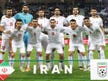
Iran's 2026 World Cup Participation in Doubt After US Strikes
Iran's soccer federation chief casts uncertainty over playing in US-hosted tournament amid US-Israeli attacks, with 100 days to kickoff. FIFA eyes Iraq as replacement; Qatar postpones matches amid tensions.
Photo Gallery
What Happened
- US-Israel launch airstrikes on Iran, escalating Middle East conflict amid 2026 World Cup tensions.
- Iran's soccer federation president Mehdi Taj doubts participation, citing attacks and games in US (Inglewood, Seattle).
- Reports emerge of Ayatollah Khamenei's death in strikes, prompting FIFA inquiries.
- Qatar soccer federation postpones all matches due to global tensions.
- FIFA identifies Iraq (or UAE) as potential replacement for Iran per Asian Confederation rules.
- World Cup 100-day countdown highlights crisis with host US at war with qualifier Iran.
Timeline
-
Friday/Saturday: US-Israeli airstrikes bombard Iran; reports of Ayatollah Khamenei's death emerge.
-
Saturday: Joint US-Israeli airstrikes reported; Iran threatens 2026 World Cup withdrawal.
-
Sunday: Mehdi Taj (Iran FF president) tells Varzesh3 participation "unlikely," cannot look forward with hope post-attacks.
-
Monday: AP reports Iran's World Cup place in doubt; FIFA eyes Iraq as replacement from Asia.
-
Tuesday: 100-day countdown to World Cup (starts June 11); Qatar FA postpones all matches amid tensions.
Key Quotes
"It is unlikely that we can look forward to the World Cup."
— Mehdi Taj, president of the Iranian Football Federation (Marca)
"What is certain is that after this attack, we cannot be expected to look forward to the World Cup with hope.”
— Mehdi Taj, president of the Iranian Football Federation (Varzesh3)
"The US regime has attacked our homeland and this is an incident that will not go unanswered.”
— Mehdi Taj, president of the Iranian Football Federation (Varzesh3)
“Our focus is to have a safe World Cup with everybody participating.”
— Mattias Grafström, FIFA general secretary (The Guardian)
Opposing Views
Iranian Perspective
Iran's Football Federation president Mehdi Taj states participation is "unlikely" and without "hope" post-US/Israeli strikes, threatening withdrawal from 2026 World Cup games in US cities (e.g., Inglewood, Seattle). Cites national security and retaliation.
FIFA/Neutral Perspective
FIFA prioritizes "safe World Cup with everybody participating" (Mattias Grafström). Prepared contingency: Iraq (or UAE) as Asian replacement if Iran withdraws—first since 1950. No official suspension; focus on proceeding as planned despite crisis.
What Markets Believe
Historical Background
US-Iran Tensions Escalate to Direct Strikes
Iran qualified for the 2026 FIFA World Cup (co-hosted by US, Canada, Mexico) in Oct 2025, drawn in Group G (vs. New Zealand, Belgium, Egypt), with matches scheduled in Inglewood, CA (June 15, 21) and Seattle (June 26). Longstanding US-Iran enmity stems from 1979 Islamic Revolution, hostage crisis, and nuclear disputes, leading to sanctions and Trump's 2020 Soleimani assassination. Recent escalation: US-Israeli airstrikes on Iran (late Feb/early Mar 2026), reportedly killing Ayatollah Khamenei, prompted Iranian federation chief Mehdi Taj to doubt participation, citing inability to "look forward with hope." FIFA eyes Iraq as Asian replacement per regs; first potential withdrawal since 1950.
Technical Details
FIFA World Cup 2026 Technical Details
Tournament Schedule & Scale
- Starts June 11, 2026 (100-day countdown noted); first expanded to 48 teams.
- Co-hosted by USA, Canada, Mexico; largest ever by teams and venues.
Iran's Group G Assignment
- Qualified team in Group G with Belgium, Egypt, New Zealand.
- 3 group-stage matches in US: Inglewood, CA vs New Zealand (June 15), vs Belgium (June 21); Seattle vs Egypt (June 26).
FIFA Contingency
- If Iran withdraws (first since 1950), Iraq (or UAE) next from Asian Football Confederation (AFC) per ranking.
- FIFA regs vague on replacements; prioritizes "safe World Cup with everybody participating."
Related Actions
- Qatar FA postponed all matches indefinitely due to tensions.
(Iran FF president Mehdi Taj cited geopolitical risks post-US/Israel strikes.)
Economic Impact
Affected Sectors: Sports & Entertainment, Hospitality, Tourism
Short-term impacts
Iran's potential World Cup withdrawal creates uncertainty for 2026 tournament (US/Canada/Mexico hosts). Stadiums in Inglewood, CA & Seattle lose ~3 matches; minor revenue dip from tickets/merch (~$10-20M est.). Qatar match postponements signal broader soccer disruptions. Betting markets volatile; sponsor pullbacks possible.
Long-term impacts
If Iran exits (Iraq/UAE replace), host cities see reduced tourism/hotel bookings (100-day countdown heightens risks). Escalating US-Iran war could deter global fans, slashing $5-10B economic boost (jobs, infra). FIFA credibility hit; insurance claims rise. Broader economy: negligible GDP effect (<0.01%).
X Discussion Summary
- Minimal Discussion: Only two posts from @JerusalemPost sharing MARCA reports on Iran's national football team considering withdrawal from 2026 FIFA World Cup amid Middle East tensions and uncertainty about traveling to North America. No user reactions, debates, or comments noted.
Nostr Discussion Summary
No discussion or reactions; posts are solely news link aggregations from sources like AP, Fox, SCMP, Al Jazeera. No comments, debates, or unique Nostr community insights.
Bluesky Discussion Summary
Summary of Bluesky Discussion on Iran's 2026 World Cup Participation
Main Themes & Sentiments: Geopolitical tensions post-U.S./Israeli strikes dominate, with widespread doubt over Iran's ability to play U.S.-hosted matches (e.g., SoFi Stadium). Sentiments mix concern (safety, visas, boycotts), sarcasm ("no shit Sherlock"), and anti-U.S. frustration. Positive notes: Iranian people may support strikes vs. regime; sports > politics.
Common Opinions & Debates:
- Iran withdrawal likely: Predicted boycotts, financial hits to U.S. (@agenation, @Jesse Hawken).
- Blame U.S./relocate: Ban USA, move to Canada/Mexico; compare to Russia (@Sim dum, @davsyen, @SoccerMovieMom).
- Cancel/avoid U.S.: Safety fears for all teams (@Muninn).
- Optimism: Soccer transcends politics; Iranians happy about strikes (@bostwo, thread users).
Notable Accounts: News outlets (@USA TODAY Sports, @ESPN FC, @First Touch) share reports; @Antifa_Ultras adds Qatar postponement angle.
Discussion active but speculative; ~300 chars.
Full story
Iran's participation in the 2026 FIFA World Cup hangs in the balance following joint U.S.-Israeli airstrikes on the country that reportedly killed Supreme Leader Ayatollah Ali Khamenei. Mehdi Taj, president of the Iranian Football Federation (FFIRI), declared it "unlikely" the national team would compete, stating in interviews with Marca and Varzesh3, "After this attack, we cannot be expected to look forward to the World Cup with hope" and "What is certain is that after this attack, we cannot be expected to look forward to the World Cup with hope." The crisis unfolds just over 100 days before the tournament kicks off on June 11 across the United States, Canada, and Mexico, with Iran drawn into Group G alongside Belgium, Egypt, and New Zealand. Iran qualified for its fourth consecutive World Cup appearance and was slated to play all three group-stage matches on U.S. soil: against New Zealand on June 15 and Belgium on June 21 in Inglewood, California, followed by Egypt on June 26 in Seattle. Longstanding U.S.-Iran tensions, exacerbated by Iran's nuclear program and regional proxy conflicts, have now boiled over into direct military confrontation. The 2026 tournament, the first expanded to 48 teams, was already facing headwinds including spiraling costs, safety concerns in host cities, and violence in Mexico. FIFA has maintained a neutral stance amid geopolitical turmoil, with general secretary Mattias Grafström emphasizing on Saturday, "our focus is to have a safe World Cup with everybody participating." Reports of Ayatollah Khamenei's death have added urgency, prompting FIFA to seek details on potential ramifications. The sequence of events began Friday with surprise U.S.-Israeli airstrikes on Iranian targets, triggering retaliatory exchanges of drones and missiles across the Gulf. On Sunday, one day after the initial bombardment, Taj issued his first stark assessment to Varzesh3, casting immediate doubt on Iran's involvement. By Monday, as headlines confirmed Khamenei's passing, Taj reiterated to Marca that participation was improbable amid the "escalation with the U.S." Qatar's Football Association (QFA) swiftly postponed all domestic tournaments and matches until further notice, citing "global tensions" without directly referencing the strikes. Tuesday marked the 100-day countdown to the World Cup opener, amplifying the chaos as Iranian outlets like Internewscast reported considerations of a full withdrawal. FIFA has yet to issue a formal response beyond Grafström's remarks, though sources indicate contingency planning is underway. Taj's statements drew sharp reactions across the soccer world. Miguel Delaney of The Guardian described it as an "unprecedented crisis," writing, "A controversial build-up took a drastic turn with a World Cup host bombing one of the qualified teams." FIFA President Gianni Infantino faced criticism for silence, with columnist Ken Early noting he is "unlikely to reflect on World Cup host US attacking participant Iran." Asian Football Confederation insiders pointed to Iraq or the United Arab Emirates (UAE) as likely replacements, per The Guardian, citing FIFA regulations that are "vague on the issue of replacing any teams." Breitbart highlighted Taj's pessimism post-strikes, while ESPN and AP reports echoed the federation's dim outlook. Affected parties like New Zealand, Belgium, and Egypt have not commented publicly, but host cities Inglewood and Seattle officials expressed concerns over security. The fallout could reshape the tournament's narrative and logistics. A formal Iranian withdrawal—the first since France and India in 1950—would trigger FIFA to slot in Iraq, the next-highest Asian qualifier, potentially altering Group G dynamics and boosting UAE chances for a playoff spot. Security risks for the 48-nation event, already strained by U.S. visa issues and Mexican cartel violence, may intensify with protests or travel bans. Economically, Iran's absence could dent ticket sales for high-profile U.S. matches, amid reports of reluctant host cities and rising prices. Broader implications include strained U.S.-FIFA relations if government restrictions block Iranian players, possible league suspensions in Iran and Qatar rippling through qualifiers, and a precedent for geopolitics overriding sport. As Grafström insisted on universality, FIFA may convene emergency talks, but with kickoff looming, the tournament's "biggest in history" tag now carries a shadow of war. (4,128 characters)