
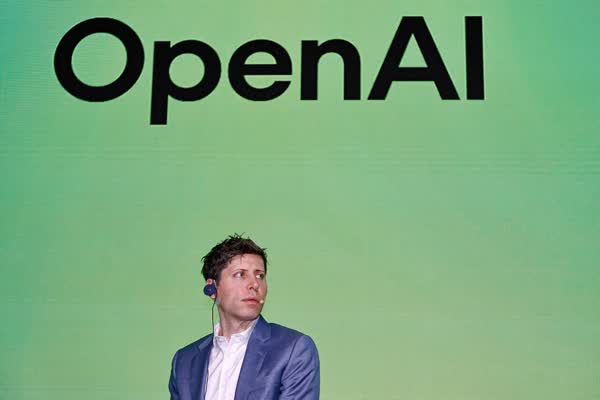
OpenAI Launches Frontier for Enterprise AI Agents
OpenAI unveils Frontier, a platform to build, deploy, and manage AI agents as coworkers with shared context, governance, and integrations. Piloted by Cisco, Uber, Intuit; responds to Anthropic's Claude Cowork.
Photo Gallery
What Happened
- OpenAI launched Frontier, an enterprise platform for building, deploying, and managing AI agents as "AI co-workers" with shared context, onboarding, permissions, and governance.
- Frontier integrates with internal systems (CRM, ticketing, data warehouses) to create a shared knowledge layer across departments.
- Pilots with Cisco, T-Mobile, BBVA; early adopters include HP, Intuit, State Farm, Thermo Fisher, Uber.
- Launched days after Anthropic's Claude Cowork, positioning Frontier as an "HR system" for orchestrating agents at scale.
- Analysts view it as a logical enterprise step but note competition from incumbents like ServiceNow, Salesforce, and rivals like Anthropic.
Timeline
- Anthropic releases 11 open-source plugins for Claude Cowork (less than a week before OpenAI's response).
- OpenAI announces Frontier platform (Feb 5, 2026, per Help Net Security; "Thursday" per CIO.com), an enterprise system for building, deploying, and managing AI agents with shared context, onboarding, permissions, governance, and integrations (CRM, ticketing, data warehouses).
- OpenAI reveals early adopters/pilots: Cisco, T-Mobile, BBVA (piloting); HP, Intuit, State Farm, Thermo Fisher, Uber (early adopters).
- Frontier becomes available to select customers with partners onboarded.
Key Quotes
OpenAI announcement: “gives agents the same skills people need to succeed at work: shared context, onboarding, hands-on learning with feedback and clear permissions and boundaries. That’s how teams move beyond isolated use cases to AI coworkers that work across the business.”
Sanchit Vir Gogia, Greyhound Research: “Frontier is all about orchestration. Think of it as the control layer, the connective tissue that makes a fleet of AI agents usable, governable and, most importantly, dependable.”
Thomas Randall, Info-Tech Research Group: “the question for enterprises will be: which provider will become your standardized orchestration platform for AI workflows? Will it be OpenAI? Or, more likely, will it be a platform such as ServiceNow...?”
Jason Andersen, Moor Insights & Strategy: “they have already shown themselves to be disruptors and are now positioning themselves more directly in the SaaS and enterprise productivity space.”
Opposing Views
Positive Views
- Logical enterprise step: Analysts (e.g., Jason Andersen, Thomas Randall, Arun Chandrasekaran) see Frontier as natural evolution for OpenAI, enabling agent orchestration, governance, and integration with tools like CRM/ticketing. Pilots with Cisco, Uber, Intuit hailed as quick value for existing users.
- Complementary to rivals: Sanchit Vir Gogia views it as "control layer" for scale, distinct from Anthropic's Claude Cowork (task-focused, siloed); together, they solve deployment bottlenecks.
Critical/Cautionary Views
- Losing first-mover edge: Randall notes Anthropic more proactive; incumbents (ServiceNow, Salesforce, Microsoft) already embed agents, questioning if OpenAI displaces them.
- Risks of dependency: Chandrasekaran warns of over-reliance on OpenAI, high costs, uncertain ROI in fast-changing AI space.
- Monetization push: Some frame as revenue grab amid competition, not true innovation.
Historical Background
AI Agent Platforms Emerge from Chatbot Era
OpenAI's Frontier (Feb 2026) builds on the 2022-2023 explosion of generative AI via ChatGPT, which popularized LLMs for chat but exposed limits in enterprise: siloed tools lacking workflow integration, governance, and multi-agent coordination.
Key precursor: Anthropic's Claude Cowork (launched ~1 week prior), with 11 open-source plugins for automated tasks in support/IT. This spurred OpenAI's rapid response, mirroring 2023-2025 rivalry (e.g., GPT-4o vs. Claude 3.5).
Enterprise shift accelerated post-2024: Incumbents like ServiceNow/Salesforce embedded agents; pilots by Cisco/T-Mobile/Intuit show demand for "AI coworkers" with shared context/permissions, evolving from isolated pilots to scalable orchestration.
This competitive escalation addresses "velocity gap"—deploying reliable agents across CRM/ticketing/data systems—fueled by maturing agentic AI (e.g., o1 reasoning models).
Technical Details
Key Technical Details: OpenAI Frontier Platform
Enterprise Integration Layer
Connects AI agents to internal systems like CRM, ticketing platforms, and data warehouses, creating a shared knowledge layer for cross-departmental process understanding and decision-making. Uses open standards for app integration, avoiding replatforming.
Agent Management Features
Provides shared context, onboarding, permissions/governance, hands-on learning with feedback, and logging/measurement. Agents gain "identity, purpose, memory" for production-scale deployment.
Multi-Interface Access
Agents accessible via any interface, not locked to single UIs/apps; supports third-party agents and preexisting infrastructure.
Pilots & Adopters
Tested by Cisco, T-Mobile, BBVA; early adopters include HP, Intuit, State Farm, Thermo Fisher, Uber. Now available to select customers.
Differentiation from Competitors
Unlike Anthropic's Claude Cowork (siloed, plugin-based task automation), Frontier emphasizes orchestration, centralized policy, cross-agent awareness for enterprise-scale governance.
Economic Impact
Affected Sectors: AI/Tech, Enterprise Software, Productivity Tools
Short-term Impacts
- Boost to OpenAI revenue: Enterprise platform launch accelerates monetization, lifting AI sector stocks (e.g., MSFT up ~1-2% on similar news). Early adopters like Uber, Intuit signal quick pilots.
- Competition intensifies: Pressures rivals (Anthropic, ServiceNow, Salesforce); may spark pricing wars or integrations, stabilizing SaaS markets.
Long-term Impacts
- Productivity surge: AI agents streamline CRM, IT ops; 10-20% efficiency gains across finance, telecom (e.g., BBVA, T-Mobile), cutting labor costs.
- Enterprise AI shift: Reduces vendor lock-in via open standards, but risks dependency; broader economy sees GDP lift from automation (~0.5-1% annually).
- Job displacement: Routine tasks automated, pressuring white-collar sectors while creating AI management roles.
X Discussion Summary
Main Themes
- Excitement vs. Concerns: Enthusiasm for AI "coworkers" boosting productivity ("AI >>> humans"; transforms work environments). Fears of job displacement ("RIP to new CS graduates") and AI scaling over headcount.
- Criticism of OpenAI: Distrust over "coercive control," manipulation, lack of safety transparency; calls for alternatives like Moltbot.
- Competitor Comparisons: Seen as response to Anthropic/Palantir; open-source rivals like OpenClaw questioned.
Sentiments
Mixed: Positive (fascinating, efficient) ~50%; Negative (job loss, distrust) ~40%; Neutral queries (features, availability) ~10%.
Notable Voices
- @taekim: Briefing insights on Frontier, AI agents using enterprise data.
- @fidjissimo (OpenAI CEO of Apps): Predicts pervasive AI coworkers.
- @William | Relax to Rich: Highlights efficiency gains.
Debates/Reactions
Job impacts, value vs. competitors, feature requests (video input, integrations). No minimal discussion.
Bluesky Discussion Summary
Summary of Bluesky Discussion on OpenAI's Frontier Launch
Main Themes & Sentiments: Overwhelmingly negative, with sarcasm and anger dominating. Focus on job displacement, dehumanization of workers, and anti-AI backlash. Users mock "treating agents like human employees" amid real layoffs.
Key Reactions:
- Job Loss Fears: @ð¥ð¤Danielleð¤ð¥ links it to enterprise layoffs, rising PC memory/electricity costs.
- Irony/Criticism: @Peter Sealy Art & Photography calls out hypocrisy in treating humans as "disposable cogs."
- Hostility: "Death to Robots!" (@Green Hombre), "vile use of AI" (@MN Meowma), slap-face joke (@Very Frank).
Debates/Opinions: No pro-AI voices; consensus on AI as threat to workers. Minimal engagement beyond snark; @TechCrunch post sparked outrage.
Full story
OpenAI has launched Frontier, a new enterprise platform designed to build, deploy, and manage AI agents as "co-workers" with shared context, onboarding, permissions, and governance, directly competing with Anthropic's recent Claude Cowork release. The platform integrates with internal systems like CRM tools, ticketing platforms, and data warehouses to create a unified knowledge layer for cross-departmental AI operations. Early adopters including Cisco, T-Mobile, BBVA, HP, Intuit, State Farm, Thermo Fisher, and Uber are piloting or testing it, marking OpenAI's push into enterprise AI orchestration. OpenAI's Frontier arrives amid intensifying competition in agentic AI, where companies seek to move beyond chatbots to autonomous systems that handle complex workflows. Less than a week before Frontier's Thursday announcement, Anthropic unveiled 11 open-source plugins for Claude Cowork, enabling automated processes in customer support, IT operations, and more. Frontier is framed as an "HR system for AI agents," providing skills akin to human employees—shared context, hands-on learning with feedback, and clear boundaries—while connecting to existing applications via open standards without requiring replatforming. OpenAI executives emphasized its compatibility with third-party AI agents and accessibility through any interface, positioning it as a control layer for scaling AI beyond isolated pilots. The rollout follows a chronological escalation in enterprise AI tools. Anthropic's Claude Cowork plugins dropped first, prompting OpenAI's swift response with Frontier's official unveiling on openai.com. Coverage quickly proliferated: The Wall Street Journal reported it as a product for building "AI co-workers," TechCrunch highlighted enterprise agent management, and The Verge described it as a bid to oversee all company AI agents. Help Net Security noted Frontier's role in organizing agents across business tasks, while OpenAI separately introduced Trusted Access for Cyber, a framework expanding frontier cyber capabilities with misuse safeguards—though details on its integration with Frontier remain unclear. Now available to select customers, Frontier builds on OpenAI's dominance as the most popular model provider for enterprise AI deployments. Industry reactions are mixed, blending enthusiasm with caution. Jason Andersen, VP and principal analyst at Moor Insights & Strategy, called it a logical step for disruptors like OpenAI entering SaaS and productivity spaces, but questioned its edge over incumbents like Microsoft Office, SAP, and Slack, which already embed agentic tech. "The real question... is how they will not only augment, but also leverage agents to transform the customer value proposition," Andersen said. Thomas Randall, research director at Info-Tech Research Group, acknowledged OpenAI's lead but warned it's "not market-leading," with Anthropic gaining developer traction and platforms like ServiceNow and Salesforce embedding agents in supply chain and sales workflows. "Which provider will become your standardized orchestration platform?" he asked. Arun Chandrasekaran, distinguished VP analyst at Gartner, praised the focus on enterprise expansion beyond models and ChatGPT, offering quicker time-to-value for existing users, but stressed needs for "robust governance controls and deep integration." He flagged risks like dependency on one supplier and upfront costs with uncertain returns. Sanchit Vir Gogia, chief analyst at Greyhound Research, differentiated Frontier from Claude Cowork: "Frontier is all about orchestration... the control layer... giving these agents structure," while Cowork is a "doer" for task-level automation. "They’re not in conflict, they’re complementary," Gogia said, viewing Frontier as closing the "velocity gap" in reliable agent deployment. OpenAI's announcement quoted: "That’s how teams move beyond isolated use cases to AI coworkers that work across the business." Frontier signals OpenAI's monetization pivot toward enterprise infrastructure, potentially locking in users through agent management fees and deepening reliance on its ecosystem. Success could accelerate AI's shift from pilots to production-scale "co-workers," transforming workflows at firms like Intuit and Uber, but faces hurdles from entrenched players and rivals like Anthropic. If governance proves robust, it may standardize OpenAI as the enterprise orchestration hub; failure risks vendor lock-in backlash in a fast-evolving landscape. Broader implications include heightened competition driving innovation in agent reliability and ethics, with Trusted Access for Cyber hinting at cybersecurity expansions. Enterprises must weigh integration ease against multi-vendor flexibility, as AI agents redefine labor without displacing humans—yet.